 SIGN-UP FOR THE MHPS NEWSLETTER!









You never really know what you’re going to get when you pull into your next campsite. Every site is different—some will be as level as a pool table, while others are…less level, to put it mildly. And even when everything else about the spot is perfect, a small slope can still throw things off once you’re unhitched and stepping inside.
But a less-than-level site doesn’t have to derail your setup. Your towable RV still needs to be leveled for comfort and for the way your trailer and its systems are meant to operate. A couple of basic tools, a steady approach, and a bit of patience are usually all it takes to get the trailer sitting the way it should so you can enjoy the rest of your stay.
Plastic RV leveling blocks, small oval levels, and wheel stops are all options that can make this easier to manage from one campsite to the next.
Why RV Leveling Matters
A level RV does more than make the space feel balanced. It also supports how your systems and structure hold up over time.
Comfort
Sleeping, cooking, and moving around are more comfortable when the RV sits level. Beds stay flat, floors don’t feel slanted, and doors stay where you put them.
Appliance support
Refrigerators, water heaters, toilets, and slide mechanisms work best when the RV is reasonably level. A noticeable tilt can cause some systems to slow down, shut off, or give inaccurate readings, which can add up to extra wear.
Safety
A stable RV lowers the chances of slips, weight shifts, or unexpected movement as people walk in and out or move around inside—especially when cooking or using appliances.
Door and cabinet function
Cabinet, closet, and bathroom doors tend to swing open or not latch well if the RV is out of level. Keeping things level helps those everyday details work the way they should.
Drainage and moisture control
When the RV is level, water drains the way it was designed to. That reduces the chance of leaks, pooled water, and moisture problems that can lead to mold or damage.
How to Level a Towable RV (Step-by-Step)
Now that you know what RV leveling helps prevent, the setup itself is fairly simple. These steps walk you through the process from start to finish.
Step 1: Set Up Your Levels
You will need 2 RV leveling blocks. One should be large enough that you can read from the cab of your truck, and the other can be smaller. It would be a good idea to use a carpenter’s level temporarily to ensure the trailer is level before attaching the two permanent levels. The easiest way to get your RV level before attaching the permanent levels is to use a level driveway at home or other level concrete slab.
Step 2: Mount the Front Level
Install the larger level anywhere you want on the front of your RV, as long as you can see it clearly from the driver’s seat of the tow vehicle.
Step 3: Mount the Side Level
The smaller level should be installed on the side of the trailer where you can watch it while you operate the tongue jack or landing gear.
Step 4: Prepare Your Leveling Boards
Next, you will need 3 lengths of 2 x 8 wood with no knots or cracks. The length of the first board should be determined by measuring the distance between the axle hubs and adding 18 to 24 inches. The board should be long enough to allow each tire’s footprint to be completely on the board. Give yourself a little leeway so you will be able to stop the RV before rolling off the back of the board. How well you can control the RV when backing onto the boards will determine the length of that first board. The second board needs to be cut 5 inches longer than the first board. The third board should be 5 inches longer than the second board.
Step 5: Choose the Best Spot in the Campsite
Determine where in the campsite you wish to park the trailer. Keeping a good eye out for the most level spot will make things a lot easier in the long run.
Step 6: Position and Check for Side-to-Side Level
Now it’s time to start the RV leveling process. Position the trailer where you want it. Watch the large level on the front of the trailer as you position it. Sometimes the difference in being level or not is only a foot or two. If the large level on the front of the trailer indicates the trailer is level, you are finished. If not, continue to the next step.
Step 7: Place Leveling Boards Under the Low Side
Using the leveling boards discussed earlier, place one or more in front of or behind the low side tires.
Step 8: Drive Onto the Boards and Fine-Tune
Drive onto the boards. Recheck your level. Repeat this by adding or removing boards as needed. This method results in the trailer being parked as much as three feet from the original position. If you are happy with that, skip to step 9. If you want to be level in the original spot, drive the trailer forward or backward enough to clear the boards and place the boards in the tire tracks. Now start over step 8, and you should be in the original position.
Step 9: Chock the Wheels and Disconnect
Once you are satisfied with the side-to-side leveling, you can chock the wheels and detach your tow vehicle.
Step 10: Adjust Front-to-Back Level
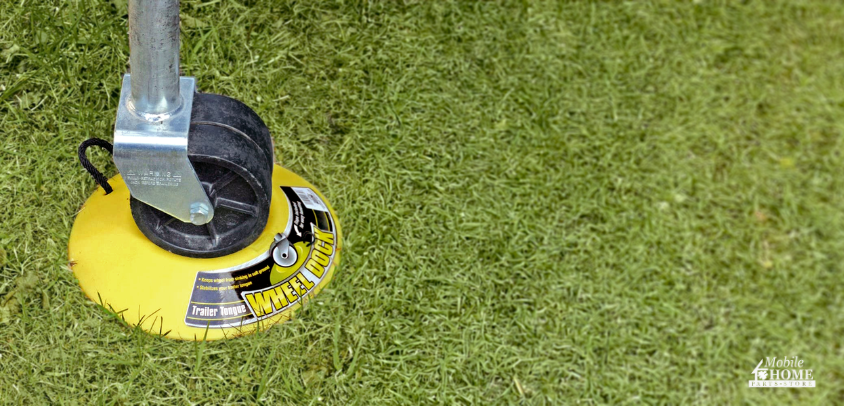
Using the tongue jack for travel trailers or landing gear for 5th wheels, adjust your front-to-back level. Look at the small level you attached to the side of the trailer and ensure the bubble is as close to the middle as possible.
Step 11: Lower Stabilizers to Steady the Trailer
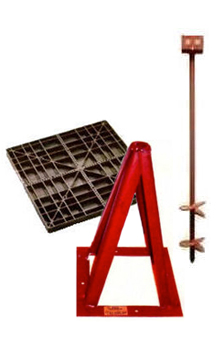
Once you are satisfied that the trailer is reasonably level, lower any stabilizers to the ground to reduce rocking and bouncing. Use wood or plastic blocks under the jacks to avoid sinking the jacks into the ground.
Always chock the trailer wheels before detaching the trailer from the tow vehicle.
This ensures the trailer cannot roll in the event that there is a slope from front to back.
Common RV Leveling Mistakes to Avoid
Leveling gets easier with practice, but a few common missteps can slow things down or create extra strain on your RV. These are the issues worth watching for as you set up at a new site:
Parking on a Steep Slope
A small amount of grade is manageable, but anything beyond a light slope can make RV leveling difficult. Sites with a 3–5% grade are generally workable. Once you reach 5–10%, you’ll rely more heavily on boards, wheel chocks, and stabilizers. Anything steeper than that is usually better avoided, since the RV may remain unstable no matter how many adjustments you make.
Setting Up on Soft or Shifting Ground
Mud, sand, and other soft surfaces can cause tires and stabilizers to sink, forcing the RV off-level again. Even with blocks or pads, the weight of the RV can settle unevenly throughout your stay. Looking for a firmer spot on the pad can prevent a lot of frustration later.
Using Stabilizer Jacks to Lift the RV
Stabilizers are designed only to reduce movement once the RV is already level. They aren’t meant to carry the full weight of the trailer and can bend or collapse if used as lifting tools. Level with the wheels and main jack first, then drop stabilizers lightly to steady the trailer.
Extending Slide-outs Before Leveling
Most towable RVs are built to be leveled with the slides in. Leveling first ensures the frame can support the weight and alignment of the slide once it’s extended. Some models with auto-leveling systems have different recommendations, so it never hurts to check the owner’s manual for your exact model.
Stacking too Many Leveling Blocks
Boards and RV leveling blocks are helpful, but there’s a limit to how high you should go. If you need more than a few layers to get the RV level, that’s usually a sign the trailer needs to be repositioned slightly. A small shift forward or backward on the pad often reduces the amount of lift required.
Forgetting Jack Pads Under Stabilizers
Stabilizers and landing gear should sit on something solid—not directly on the ground or campsite pad. Soil, gravel, and even warm asphalt can shift under pressure. A simple wood or plastic pad spreads the load and keeps jacks from sinking during your stay.
Skipping Wheel Chocks
Even a slight slope can let a trailer roll once it’s unhitched. Chocks should go in place before the tow vehicle comes off, and they should sit snugly against the tire—not the leveling boards.
Watching out for these issues keeps RV leveling more predictable and helps reduce unnecessary strain on the RV’s frame and systems over time.
Getting Ready for the Next Campsite with RV Leveling
Every campsite brings something a little different, and once your trailer is leveled and settled, you can focus on what you came for—enjoying the trip. A good setup takes the edge off those first few minutes at a new site and makes the rest of the stay feel more relaxed. It’s one of those small routines that pays off as soon as you step inside.
If you’re getting ready for your next trip and want to make sure your kit is complete, Mobile Home Parts Store has a full line of RV leveling and stabilizing products worth having on hand. The right gear takes the pressure off setup and helps each new campsite start on a better foot.
Updated on January 27, 2026: This article has been refreshed with the latest insights, tips, and product recommendations to ensure it provides the most accurate and helpful information for our readers.

