 SIGN-UP FOR THE MHPS NEWSLETTER!






It usually happens at the worst moment. You’re rinsing dishes, or maybe brushing your teeth, when water suddenly starts spraying where it shouldn’t. In seconds, your calm evening turns into a frantic scramble to stop the flood.
That’s when knowing where your water shut-off valve is becomes more than just a handy bit of trivia—it’s your lifeline.
Mobile homes don’t always follow the same plumbing patterns as site-built houses, and that can make finding the right valve tricky. The truth is, once you know where to look, finding it is surprisingly simple. This guide will walk you through how to track it down and keep it working—so a plumbing surprise stays just that, not a disaster.
The Valves That Keep Water Under Control
Your plumbing is like a branching tree. Water comes in through one main trunk and then splits off to every sink, toilet, and appliance in your home. Most of those branches have their own little shut-offs, and the whole tree can be stopped at the main.
Here’s the quick overview:
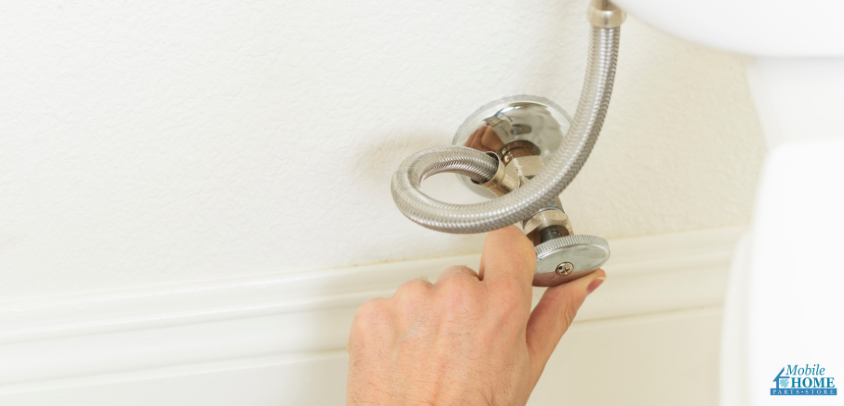
- Fixture shut-offs: Small valves tucked under sinks or behind toilets, meant to shut off water to one spot at a time.
- Appliance shut-offs: Found near your water heater, washing machine, dishwasher, or refrigerator.
- Main water shut-off valve: Cuts water to the entire home—your first move during a significant leak.
- Curb or meter shut-off: Located at the property line or street. It’s the “master switch” when all else fails.
If a leak is small and isolated, shutting off just that fixture is usually enough. If something bursts behind a wall or beneath the floor, go straight for the main shut-off and stop everything at once.
How to Spot the Main Water Shut-off Valve Indoors
In most mobile homes, the main valve lives near the water heater or utility area. It’s typically on the cold water line coming into the house.
A newer home might have a simple lever-style ball valve that turns off with a quick quarter-turn. Older homes might use a gate valve that needs several full twists to close. If you don’t see it by the water heater, check the floor line behind an access panel, inside a closet, or near an exterior wall.
Remember—because supply lines in mobile homes come up through the floor instead of running inside walls, the main shut-off valve will usually be close to the floor where the water enters. It may be hiding behind insulation or tucked behind a panel, so be patient while you search.
When It’s Not Inside: Checking Under the Home
Can’t find it indoors? It might be underneath.
Some mobile homes have their water shut-off valve in the crawlspace, just before the main water line rises through the underbelly. To find it, remove a skirting panel and look for the main line where it comes out of the ground. The valve should be right there before the pipe turns upward.
It’s not the easiest place to reach, but it’s worth knowing about before an emergency hits. Keeping a flashlight, gloves, and a dry towel handy makes crawling under there a lot less intimidating when time matters.
The Last Resort: The Curb or Meter Shut-off
If your main valve is stuck, broken, or just nowhere to be found, you can shut off the water at the curb or meter.
Look for a round or rectangular lid near the street labeled “water” or “meter.” Under that cover, you’ll see the water meter and a larger water shut-off valve on the supply side. It might look like a flat handle or a small metal tab.
Use a curb key if you have one, or slide a screwdriver through an adjustable wrench to make a T-shaped handle. Turn the valve slowly until it’s perpendicular to the pipe. That stops all water from coming into your home.
If you live in a park community, this shut-off might be on a pedestal or riser just outside. If you’re not sure which is yours, ask management before you ever need it. It’s far easier to find it calmly on a clear day than in a panic at 2 a.m.
Fixture Valves You Can Use for Small Fixes
For everyday issues, you don’t always need to shut down the whole house.
- Kitchen: Most sinks have two small valves (hot and cold) underneath. Your dishwasher usually ties into the same lines. The fridge’s icemaker line may have a shut-off behind it or under the sink.
- Bathroom: Sink valves sit just under the basin, while the toilet usually has a small chrome valve on the wall behind it. Showers and tubs don’t usually have individual valves, so use the main if needed.
- Laundry: Hot and cold valves sit in a recessed box behind the washer—close both if you see any leaks.
- Water heater: There’s a cold water inlet valve at the top. Closing it will stop new water from entering the tank if it’s leaking.
These small valves are handy for repairs, but be gentle—if one is stuck, don’t force it. You’re better off using the main shut-off than breaking a stubborn old valve.
Why Plumbing Layout Feels Different in a Mobile Home
If you’re used to site-built homes, mobile home plumbing can seem… backwards.
Instead of running inside the walls, water lines are routed under the floor and then stubbed up into each room. It makes factory construction faster, but it also means valves tend to be at floor level, inside cabinets, or behind small panels.
If you need to trace a line, you should remove a skirting panel and peek at the underbelly. Just be sure to reseal insulation or vapor barriers when you’re done to keep out moisture and pests.
Once you understand this layout, finding any water shut-off valve becomes much less of a mystery.
Stay Ready: Label, Test, and Keep Valves Moving
Knowing where your valves are isn’t enough—they need to work when you need them.
Make a habit of labeling the main and central fixture valves so anyone can find them fast. Twice a year, turn them off and back on to keep minerals from building up and sticking to the handles. After you close one, open a faucet downstream to check that the water fully stops.
If you’ve got old multi-turn valves that stick or squeal, consider upgrading them to quarter-turn ball valves. They close with a quick flick and are much easier to operate during a leak.
And if you can, keep a curb key in an easy-to-reach spot. When water is pouring where it shouldn’t, the last thing you want is to be digging through the garage.
Water Shut-off Valve Knowledge = Quick Leak Control
Water can do thousands of dollars in damage in just minutes—but stopping it can take only seconds if you know where to go.
Take a little time now to find your water shut-off valve, label it, and make sure it moves smoothly.
It’s a simple bit of home know-how that can make all the difference in an emergency.
And if you need replacement valves, tools, or plumbing parts to make sure you’re ready, Mobile Home Parts Store is here to help you get set up and protected.

