 SIGN-UP FOR THE MHPS NEWSLETTER!







If you live in a manufactured home, you already know how every inch of space matters—and how the systems behind your walls and under your floors don’t always match what you see in a site-built house. That becomes especially clear the moment your mobile home furnace starts acting up and you begin shopping for a replacement. At first glance, a furnace is a furnace… right? One metal cabinet looks a lot like the next, and the specs can blur together when you’re just trying to keep your home warm without turning the whole project into a remodel.
But here’s the part most homeowners don’t find out until they’re in the thick of it: manufactured homes follow their own code requirements, and that means your heating system has to meet standards that standard residential furnaces simply aren’t built for. The size of your closet, the way your ducts run, the type of venting your home uses—all of it shapes what will actually work safely and efficiently in your space.
What helps is knowing why those differences exist. Once you understand the reasoning behind the codes, the venting setups, the cabinet sizes, and the airflow needs, the whole process becomes far less confusing. It’s not about making your life harder—it’s about making sure the equipment that heats your home is designed to work with it, not against it.
So before you start comparing models or pricing out replacements, it’s worth taking a closer look at what sets a mobile-home-rated furnace apart from the ones built for traditional houses.
Why Your Mobile Home Furnace Isn’t Interchangeable
The first big difference starts with something you rarely think about: how the furnace is listed and approved.
Manufactured homes follow federal HUD standards, and those codes require that a mobile home furnace be tested and approved specifically for manufactured housing. The rating plate and label on the unit tell you where the furnace can be installed, what type of fuel it uses, and how it must be vented to stay safe and code-compliant.
A standard residential furnace might look very similar sitting on a showroom floor, but it’s usually tested for a totally different setup—often a basement, attic, or large utility room with more open space and different airflow assumptions. When you drop that kind of furnace into a tight hall closet, it may “work” at first, but you’re asking it to operate in a situation it was never designed or tested for.
When a furnace isn’t listed for manufactured housing, you can run into:
- Venting and combustion air conflicts inside a small closet
- Return air issues that hurt airflow and comfort
- Safety and insurance concerns if something goes wrong
The guidance here is straightforward: the furnace has to match both the fuel type and the code requirements for your home. If the label doesn’t clearly state that it’s approved for manufactured or mobile homes, it’s not the right choice—no matter how tempting the price or how similar it looks.
Footprint, Weight, and Form Factor
Next, think about where your mobile home furnace actually lives.
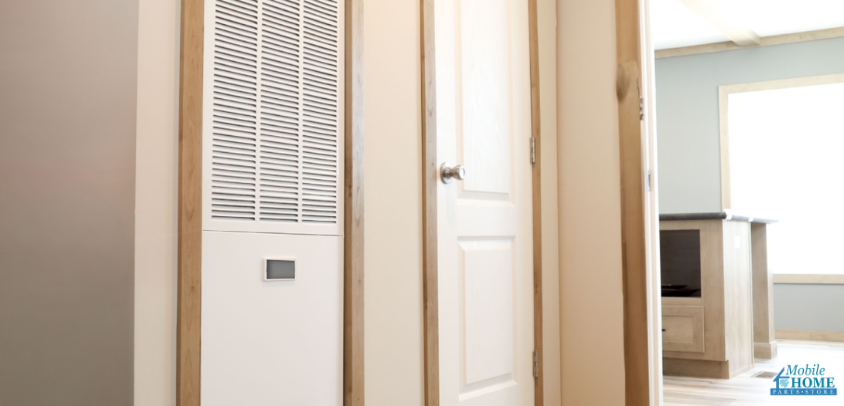
In many manufactured homes, the heating system sits in a narrow hallway or bedroom closet. A mobile home furnace is built with that in mind. It’s typically tall and slim, designed as a downflow unit so warm air can move straight into the floor plenum without rebuilding floors, walls, or doorways.
Standard residential furnaces are often wider and set up for upflow or horizontal installations. They’re meant to sit in basements, crawl spaces, or larger mechanical rooms where there’s more space and a solid floor underneath. Weight isn’t much of a concern when the unit sits on a concrete slab.
In a manufactured home, the cabinet’s size and shape affect:
- Whether the furnace can actually make the turns through your doorways and hallways
- The type of platform or base needed to support it safely
- The way the cabinet lines up with your existing floor duct opening
Two furnaces can have similar heating capacity on paper, but the one that actually fits your closet, lines up with the duct, and matches the venting will always be the better choice in real life.
Clearances and Return Air: Working Inside Tight Spaces
Now zoom out and look at everything around the furnace—walls, trim, closet doors, and even the things you store nearby. All of that matters to how the system works.
Furnaces rated for manufactured homes are tested with very tight clearances. The installation manual and rating plate will spell out exactly how close the unit can be to framing, drywall, and the door. Those numbers come straight from the furnace’s listing and from the codes that apply to your home.
Return air is just as important. When the closet door closes, air still needs a way back to the blower. That’s why you often see:
- Louvered or slotted doors
- Wall return grilles
- A deeper cut under the door
These openings aren’t just “nice to have”—they’re part of the air system and required by code to keep airflow balanced.
If the return air path is too small or blocked, you might notice:
- Longer furnace run times and higher utility bills
- Rooms that never feel quite as warm as others
- Extra strain on the blower and heat exchanger
Standard home systems usually rely on bigger return ducts and more open spaces. In a manufactured home, the return path is carefully planned into the closet, door, and wall openings, and your mobile home furnace is designed to work with those details, not push against them.
Venting and Combustion Air: Roof Jacks vs. Chimneys and PVC
Venting is one of the biggest reasons a mobile home system can’t be treated like any other furnace installation.
In many manufactured homes, the mobile home furnace uses a sealed combustion design paired with a roof jack. The roof jack does double duty: it pulls in fresh combustion air from outside and vents exhaust gases back outdoors. The burner area is sealed off from the living space, which lowers the risk of back-drafting and carbon monoxide problems in a tight closet.
High-efficiency models may use two separate PVC pipes—one for intake and one for exhaust—but the goal is the same. Combustion air and exhaust are controlled and kept separate from indoor air.
Standard residential furnaces might tie into a metal chimney, a masonry flue, or a sidewall PVC vent. Those setups assume bigger rooms, more open airflow, and different code allowances. In a narrow closet with limited fresh air, those assumptions don’t hold up.
When you replace or upgrade a furnace in a manufactured home, it’s important to match:
- Which venting setup is the furnace designed for (roof jack, concentric vent, PVC, etc)
- How much pipe run the system allows, including the number of elbows
- Where the vent can safely terminate outdoors based on required clearances
Getting venting right is one of the most critical parts of any furnace project. It’s not just about comfort; it’s about safety.
Chassis Mounting, Floor Base, and Duct Connection
Under the furnace, things look different again.
In most manufactured homes, the furnace blows air down into a floor plenum. That plenum feeds an under-floor trunk line and then smaller branch ducts to each room. For this to work well, the furnace cabinet has to sit properly on its base or plenum so the opening in the furnace matches the opening in the duct system.
A mobile home furnace is often paired with a specific base or plenum kit. That kit helps support the weight of the unit, protects the floor, and seals the connection between the furnace and ductwork.
If that plenum connection is loose, crooked, or poorly sealed, you can lose a lot of heated air into the closet instead of sending it down the ducts. That can create hot spots around the furnace, stress the blower, and leave rooms at the far end of the home feeling chilly.
Standard residential furnaces—especially upflow or horizontal models—are designed for side or top plenums that feed overhead ducts. That layout is very different from the under-floor systems used in most manufactured homes.
Efficiency and Fuel Options
Efficiency is important, but with manufactured housing, it’s only one part of the decision.
Gas-fired furnaces rated for manufactured homes are commonly available in mid-efficiency ranges, with some higher-efficiency options as well. In areas without natural gas or propane, electric downflow furnaces are also a common solution. They’re designed to fit the same style cabinet and tie into the existing duct system without major reconstruction.
When you’re comparing one mobile home furnace to another, it helps to look at:
- Fuel type (natural gas, LP, or electric)
- AFUE rating and how it affects your operating costs
- How well the furnace pairs with an A/C coil or heat pump
Standard residential furnaces can sometimes offer very high AFUE ratings, but if they don’t match the venting, duct layout, clearances, or code requirements for your home, they’re not the right fit. In a manufactured home, “efficient” also has to mean “properly listed and installed for this type of construction.”
Airflow, Static Pressure, and Duct Performance
Airflow is the quiet hero of your heating system. You don’t see it, but you definitely feel it.
Manufactured homes usually have shorter, smaller ducts than larger site-built houses. Furnaces designed for these homes are tested at higher external static pressures so they can still move enough air through compact trunk lines and small branch ducts.
To help your mobile home furnace perform the way it should, it’s smart to pay attention to:
- Return duct and grille sizing
- Filter type and MERV rating
- The added pressure drop from an A/C coil
A restrictive filter or undersized return duct can choke airflow, even when the furnace itself is the right size. That can lead to uneven heating, extra noise at the registers, and shorter equipment life.
Checking the blower tables in the installation manual and matching the blower speed to your duct system is a simple step that can make a noticeable difference in comfort.
Safety Labels, Ratings, and Maintenance
Every mobile home furnace carries ahas a rating plate; that small metal tag tells you how the unit was tested, what fuel it uses, and where it’s allowed to be installed.
For a manufactured home, you want that label to clearly state approval for manufactured or mobile home use, along with the correct fuel type. Any fuel conversion—like switching from natural gas to propane—should be done with the proper kit and documented exactly as the manufacturer requires.
Sealed combustion designs add another layer of peace of mind by keeping the flame area separate from the air inside your home. That’s especially helpful when the furnace lives in a small closet or tight mechanical space.
Once your mobile home furnace is properly installed, regular maintenance becomes your best insurance policy. A yearly check of:
- Burners and heat exchanger
- Venting and roof jack or PVC terminations
- Electrical connections and controls
- Filters and return openings
Can catch small issues before they turn into bigger problems—and help your system run more efficiently over time.
Choosing a Mobile Home Furnace That Fits Your Home
A manufactured home doesn’t heat the same way a site-built house does, and that’s not a drawback—it simply means your furnace has to be chosen with your home’s design in mind. The cabinet shape, the clearances, the venting, the plenum connection, the airflow requirements… all of these pieces work together as one system, and when they’re matched correctly, everything runs smoother, safer, and more efficiently.
Understanding those differences puts you in a stronger position when it’s time to replace or upgrade your furnace. Instead of guessing or hoping a “standard” unit will fit, you can look at labels, code approvals, and venting requirements with confidence. The right mobile-home-rated furnace isn’t just about staying warm—it’s about choosing equipment that supports the way your home was built and protects it in the long run.
If you’re getting ready for a repair or planning a full replacement and want equipment that’s made for manufactured housing, Mobile Home Parts Store is here to help. We carry furnaces, bases, vent kits, filters, and everything else you need to put together a safe, code-approved setup that truly fits your home. Our team is always happy to help you find the right match—so your home stays comfortable season after season.
Tags: electric furnace, mobile home furnace, nordyne furnace

