 SIGN-UP FOR THE MHPS NEWSLETTER!




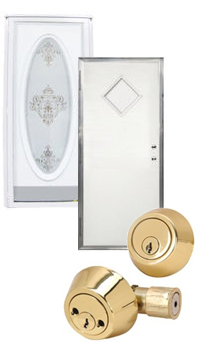




Keeping a mobile home warm and comfortable in winter can feel like a constant battle—especially when heat is slipping out around the door. As your home ages, the wood around the door frame can start to settle or warp, which is a normal part of the process. Over time, weatherstripping can crack, trim can relax, and the bottom sweep wears down. Any of these changes can leave small gaps where cold air starts finding its way inside.
Insulating and draught-proofing mobile home doors is one of the simplest DIY upgrades you can make. When the leaks are sealed, the entryway tends to feel steadier, the air feels cleaner, and you’re not nudging the thermostat higher just to stay comfortable. The key is finding which gap is doing the most damage—then starting with the fix that makes the biggest difference first.
Spot the Draft Before You Buy Anything
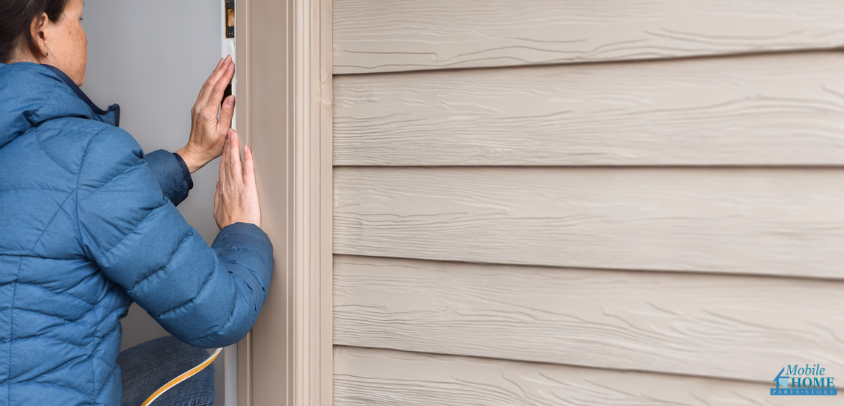
Start with the easy spots: the frame, the corners, and the bottom edge. Run your hand around the door while it’s closed. A spot that feels noticeably cooler or warmer usually means the seal has weakened there.
The paper test helps too. Close the door on a strip of paper and pull. If it slides out with little resistance, that section isn’t sealing well. Corners deserve extra attention since they flatten faster than other parts of the frame, and the bottom edge is a common trouble area—daylight or airflow near the floor almost always points to a worn sweep or a shifting threshold.
If you find more than one leak, that’s normal. Pick the strongest draft first and work your way around from there.
Weatherstripping for Mobile Home Doors
One of the easiest ways to improve insulation around mobile home doors is to replace worn weatherstripping. It seals gaps around the frame where air slips through, helping your home hold a steadier indoor temperature—without the entryway feeling like the weak spot.
The difference often shows up in more ways than warmth. Fresh weatherstripping can cut down on dust and pollen drifting in around the door, which helps when allergies are already a nuisance. It can also reduce extra humidity that makes the area feel damp and, over time, can be rough on trim and finishes. Outside noise tends to soften too, simply because it has fewer places to sneak through.
Choosing the Right Type
- Foam tape works well for small, even gaps and is the most forgiving option.
- Vinyl or rubber compression seals hold up better when the frame is a little uneven or has mild warping.
- V-strip is a great fit along the top and sides when you need something flexible that springs back.
Installing It Without Fighting Your Door
This is a very manageable weekend project, and it doesn’t take much beyond basic tools and a little patience. Peel off any old stripping that’s cracked, loose, or flattened. Wipe the surface clean so the adhesive has something solid to grip. Measure the frame, cut pieces to fit, and take your time at the corners so everything lines up cleanly. Press it firmly into place, then close the door and pay attention to how it feels.
You want a snug seal—not a door you have to muscle shut. When it closes with a soft, solid “thump” instead of a rattle, you’re right where you want to be.
Mobile Home Door Sweeps to Seal the Bottom Gap
Even with the frame sealed, air can still slip in underneath the door. That lower gap is an easy entry point for drafts, and it often shows up first near your feet. A door sweep closes that space by sealing the door to the threshold, helping keep out cold air, dust, and insects that like to creep in.
A door sweep is a simple strip of rubber, vinyl, or synthetic bristles that attaches to the bottom of the door. It can be a quick standalone project or the next step after weatherstripping for extra protection. For mobile home doors, this is often the upgrade that makes the entryway feel noticeably more comfortable right away.
Choosing the Right Type
Match the sweep to your threshold and how even the floor line is across the doorway.
- Rubber or vinyl sweeps work well for everyday use on most thresholds.
- Bristle sweeps are a better fit when the threshold isn’t perfectly level.
- Metal-backed sweeps add durability and tend to hold their shape longer.
Installing for a Smooth Fit
Trim the sweep to your door’s width, line it up so it brushes the threshold without scraping, and fasten it in place. Open and close the door a few times to check the feel—snug is the goal, but the door should still swing smoothly without dragging. If it drags, adjust the sweep slightly. Small changes at the bottom edge can have an outsized impact on comfort.
Caulk and Low-Expansion Foam for Hidden Gaps
Weatherstripping and a door sweep handle the moving parts, but drafts can still sneak in through the doorway itself—especially where the frame meets the wall or where trim hides small openings. That’s where caulk and low-expansion spray foam come in. They seal cracks you don’t always notice and help the whole door area hold a tighter seal.
When Caulk Is Enough
Use silicone window & door sealant for thin cracks and seams—along trim lines, at small joints, and anywhere you can see a narrow split where air could pass through. A smooth bead seals the gap and leaves the doorway looking clean and finished.
When Foam Makes More Sense
Low-expansion spray foam is better for deeper or uneven gaps behind trim or around the frame. It expands and conforms to tight spaces, then cures into a long-lasting seal. This is especially helpful when the door opens into an area that doesn’t hold temperature well, like a utility space, storage room, enclosed porch, or other semi-conditioned entry.
Applying Foam Safely and Neatly
With spray foam, less is usually better—short bursts, then let it expand. Follow the manufacturer’s instructions closely, wear work gloves and eye protection, and give it time to cure fully before trimming any excess. Finish visible edges with caulk if needed for a cleaner look.
Sealing these hidden gaps helps mobile home doors seal more consistently. The weatherstripping sits better, the sweep doesn’t have to do all the work, and the entryway feels more stable through temperature swings.
Threshold and Door Alignment Fixes
If you’ve replaced the seals and drafts still show up, the issue is often alignment. Over time, thresholds wear down, hinges loosen, and the door can shift just enough to leave a gap that weatherstripping and sweeps can’t fully overcome.
What to Check First
A quick look can usually tell you where the door isn’t meeting the frame the way it should:
- A threshold with dips, cracks, or loose screws
- Exterior door hinges that feel loose or are pulling away from the frame
- A latch that doesn’t pull the door in snugly
Simple Adjustments That Make a Big Difference
Start at the bottom. Tighten any threshold screws and look for low spots that keep the sweep from making even contact. In some cases, replacing a worn threshold piece—or adding a thin shim underneath—brings the fit back into line.
Then move to the hinges. A slight sag can make one side seal tightly while the other side stays open. Tighten hinge screws, and if a screw hole is stripped, reinforcing it can stop the door from drifting. If the latch side still feels loose, adjust the strike plate so the latch pulls the door closed with a firmer, more consistent seal.
When the door sits square again, everything you’ve done starts working together the way it should—especially on older mobile home doors that have shifted over the years.
Shut the Door on Drafts
Fixing a draft around mobile home doors comes down to a handful of simple upgrades that work together. Weatherstripping tightens the edges. A sweep handles the bottom gap. Caulk and low-expansion foam take care of the hidden spaces around the frame. And if the door has shifted a bit over the years, small hardware adjustments can bring everything back into alignment.
When you’re ready to get started, Mobile Home Parts Store carries weatherstripping, door sweeps, thresholds, sealants, and the hardware designed specifically for mobile-home construction. With the right materials and a few easy improvements, your entryway stays comfortable, welcoming, and more energy-efficient through every season.
Tags: Exterior Doors, mobile home door, mobile home exterior doors, Sealants, weatherstripping

