 SIGN-UP FOR THE MHPS NEWSLETTER!






Quick Overview
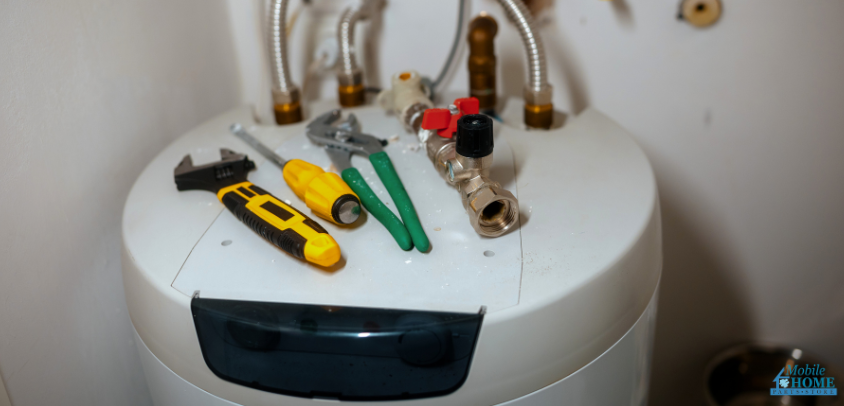
If your mobile home water heater is not producing enough hot water, the issue is often a failed heating element, thermostat problem, or sediment buildup. Testing these components can help you determine whether a simple repair will restore hot water or if the heater needs replacement.
Summarize full blog with:
You usually notice water heater trouble in small ways first. The shower does not stay hot as long as it used to. The kitchen sink gets warm, but not fully hot. Maybe the tank starts making a popping or rumbling sound that was not there before. When your mobile home water heater starts acting up, those early signs matter.
A water heater can stop working for a few different reasons, but most problems come back to the same areas. A heating element may have burned out. A thermostat may have stopped sending power. Sediment may be building up in the tank. In some cases, a reset switch has tripped because the unit got too hot. That does not always mean you need a whole new heater. Sometimes one part is all that stands between you and hot water again.
If you work through the problem in order, you can usually narrow it down without guessing. Start with the simplest checks. Then move to testing the parts that fail most often.
Signs Your Mobile Home Water Heater Is Failing
Before you pull off a panel or grab a meter, pay attention to what the heater is doing. Your water heater will usually give you a few clues before it stops working altogether. If you have noticed any of the issues below, it is time to take a closer look.
- Water runs hot, then quickly turns cold.
- Water never gets fully hot.
- Rumbling or popping sounds come from the tank.
- Hot water looks rusty or discolored.
- Water is leaking around the heater.
How a Mobile Home Water Heater Works
Most electric water heaters use heating elements inside the tank. These elements heat up when power passes through them, and that heat warms the water around them. Thermostats control when the elements turn on and off.
Many units have an upper and lower element. The upper part of the tank heats first. Then the lower element helps bring the rest of the tank up to temperature. If one of those parts fails, the heater may still work some of the time, but not well.
That is why water heater problems can feel inconsistent. You might still get a little hot water, just not enough. Or the water may be hot for a few minutes, then fall off fast.
Some units have one thermostat. Some have two. Both setups are normal. What matters is whether power is reaching the right part at the right time.
Mobile Home Water Heater Not Heating Water
Before you assume the heater itself has failed, check the breaker. It sounds simple, but it is one of the first places to look. If the breaker has tripped, reset it and see whether the heater starts working again.
If it trips again, stop there. Repeated tripping points to a deeper electrical issue, not something to shrug off.
Once you have checked the breaker, remove the access cover on the side of the water heater. Many models have one or two covers. Behind them, you will usually find insulation and a plastic shield over the wiring and terminals.
Before touching anything, use a multimeter to confirm the power is off. Do not skip that step. Turning off the breaker is part one. Verifying with a meter is part two.
If you are not comfortable testing live voltage, that is a good place to stop and bring in help.
How to Test a Mobile Home Water Heater Element
If your mobile home water heater has power but still is not heating properly, the element is one of the first parts to test.
With the power off and confirmed, remove the wires from the heating element terminals. Take a photo first or make a note of where each wire goes. That saves frustration later.
Set your meter to ohms or resistance. Then touch one probe to each terminal screw on the element.
If the meter shows continuity or gives you a reading, the element still has a complete path. If it shows nothing, or almost nothing, the element has likely failed.
You should also pay attention to what you see around it. If the area is heavily corroded, crusted over, or discolored from heat, that tells you something, too. A test result matters, but so does the condition of the part.
A burned-out element is common. It is also one of the more manageable repairs, as long as the tank and surrounding parts are still in decent shape.
How to Check a Water Heater Thermostat
If the element checks out, move on to the thermostat. This is another part that can stop the heater from doing its job.
Most electric water heaters have a high-limit safety switch, often with a red reset button. If the water gets too hot, that switch trips and cuts power to the heating system. Pressing the button may restore operation, but it should not be treated as the whole fix. If it tripped, there is usually a reason.
After resetting it, you can test whether the thermostat is sending power to the heating element. If the thermostat is sending voltage but the element is still not heating, the element is likely the issue. If the thermostat is not sending power at all, the thermostat may need to be replaced.
A faulty thermostat can show up in a few ways. The water may stay cool. It may run too hot. The temperature may swing more than it should. Or the reset button may keep tripping. Those patterns are worth noting before you replace anything.
How to Replace a Mobile Home Water Heater Element
If testing points to a bad element, shut off the breaker again and turn off the water supply to the heater.
Next, drain the tank. Hook a hose to the drain valve and run it to a safe place where the water can empty. Be careful, because the water may still be hot. Once the tank is drained below the level of the element, disconnect the wires and remove the element using a water heater element wrench.
Some elements are stubborn. If corrosion has locked it in place, do not force it so hard that you damage the tank opening. At that point, you need to weigh the repair against the condition of the heater as a whole.
When you install the replacement, match the size and wattage to the old element. That matters. A mismatch can cause poor performance or shorten the life of the new part.
After the new element is in, reconnect the wires and refill the tank completely before turning the power back on. This step matters more than people think. If you restore power while the tank is empty, the new element can burn out almost right away.
Open a hot water faucet while the tank fills so trapped air can escape. Once water is flowing normally and the tank is full, you can restore power.
Mobile Home Water Heater Leaking and Other Problems
Not every hot water problem comes down to an element or thermostat.
Sediment buildup is common, especially if the tank has not been flushed in a while. Minerals settle at the bottom over time. That buildup makes the heater work harder, cuts efficiency, and can cause popping or rumbling sounds. It can also shorten the life of the lower element.
Loose plumbing connections can cause leaks around the heater. So can a worn pressure relief valve. A small drip near a fitting may be easy to fix. Water coming from the tank body is another matter.
If the hot water looks rusty and stays that way after flushing, the inside of the tank may be breaking down. That is usually a sign the heater is getting close to the end of its service life.
Maintenance for a Mobile Home Water Heater
Basic maintenance can help your mobile home water heater last longer and help you avoid bigger problems later.
Flushing the tank once a year is a solid habit for most homes. If you have hard water, you may need to do it more often. Sediment does not leave on its own, and the longer it sits, the harder your heater has to work.
It also helps to check the area around the heater now and then. Look at the fittings. Look at the drain valve. Look for moisture where there should not be any. Listen for new sounds. Water heaters usually give you some warning before they fail completely.
If your hot water does not last like it used to, do not brush that off. If the reset button trips more than once, do not call that fixed. If the element is so corroded you can barely remove it, take that as a sign to look at the whole unit, not just the part in front of you.
When to Replace a Mobile Home Water Heater
Some repairs are worth doing. Some are not.
If the tank itself is cracked, badly corroded, or leaking from the body, replacement is usually the better call. The same goes for a heater that keeps having one problem after another. You can replace an element. You can replace a thermostat. But when the tank is failing, parts only go so far.
A worn water heater does not always quit all at once. Sometimes it just gets less reliable, less efficient, and more expensive to keep alive.
Keep Hot Water Problems From Dragging On
If your mobile home water heater is not heating the way it should, start with the basics. Check the breaker. Test the element. Look at the thermostat and reset button. Pay attention to sediment, leaks, and corrosion. In many cases, the problem comes back to one worn part.
And when you need the part that fits the job, Mobile Home Parts Store has replacement heating elements, thermostats, valves, and complete water heaters made for mobile home repairs.
Tags: mobile home, mobile home water heater, water heater, Water Heater Repair

