 SIGN-UP FOR THE MHPS NEWSLETTER!








Quick Overview
Going under a mobile home can be safe if the crawl space has enough clearance, no standing water, no strong odors, and no electrical hazards. However, tight spaces, sewage smells, animal activity, or damaged wiring can make the area unsafe. In many cases, inspecting from the skirting is safer than fully entering the crawl space.
Summarize full blog with:
New blinds or shades can make a room feel more finished, but only if the fit is right. If the measurements are off, you may end up with light gaps, uneven coverage, or blinds that do not hang or operate the way they should. Taking a little extra time to measure before you order helps you avoid those issues and gives your windows a cleaner look from the start.
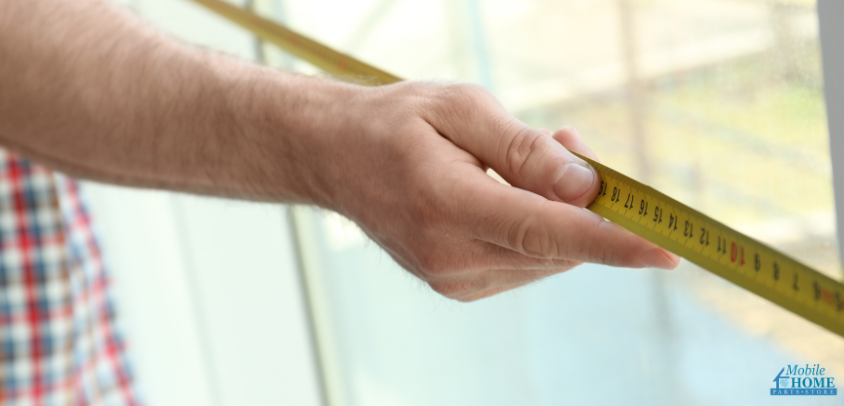
Measuring for mobile home blinds is not hard, but it does take care. If you are ordering blinds or shades for a specific opening, you want measurements you can trust. Use a measuring tape, a pencil, and paper to write everything down as you go. A step ladder can help with taller windows.
Inside Mount vs Outside Mount Blinds Measurements
Before you measure, decide how the mini blindsor shades will be installed. You will measure the window differently depending on the mount.
Inside Mount
Inside-mounted blinds fit inside the window frame. The headrail sits within the opening, which gives the window a more built-in look.
Many people like this style because it keeps the trim visible and gives the window a cleaner, more tailored appearance. It usually works best when the window frame has enough depth and the opening is fairly even from top to bottom.
Inside mounts are less forgiving, though. If the frame is shallow or uneven, the blinds may not sit the way you want them to. Small gaps along the sides are also common with this type of mount. If your window does not meet the mounting depth for the product you want, an outside mount is usually the better choice.
Outside Mount
Outside-mounted blinds install above or around the window frame. Instead of fitting inside the opening, they cover more of the area around it.
That extra coverage helps with privacy and light control. It can also make the window look larger. Outside mounts are often the better option when the frame is shallow, uneven, or not a good match for an inside fit.
They also work well when the blinds will be the main window covering. Since the treatment extends beyond the opening, it can block more light and cover more of the window area.
In many homes, outside-mounted mobile home blinds are the easier choice because they give you more flexibility and depend less on the exact shape and depth of the opening.
What to Know Before Measuring Window Blinds
A few simple habits can save you trouble later.
First, measure to the nearest 1/8 inch. Do not round to the nearest half inch or whole inch.
Second, always write measurements as width by height. Width comes first every time. If those numbers get flipped, it is easy to order the wrong size.
Third, measure each window separately. Two windows in the same room may look identical, but the openings are not always exactly the same. Small differences are easier to catch now than after the blinds are installed.
Also, do not rely on one measurement from one spot. Window openings are often a little uneven, and that matters when you are ordering mobile home blinds to fit properly.
Do not make your own deductions unless the product instructions tell you to. For many inside-mounted blinds, the manufacturer makes the needed fit adjustment. For many outside-mounted products, the blinds are made to the exact measurements you provide.
Check Window Depth Before Measuring
Depth is one of the measurements people miss most often, and it matters more than it may seem.
Window depth is the space from the front edge of the frame back to the glass. That measurement tells you whether an inside mount is likely to work. Some frames do not have enough depth for an inside mount.
Check the depth in three places:
- left side
- center
- right side
Use the smallest number. If one part of the opening is tighter than the rest, that tighter spot determines whether the blinds will fit.
Also check for anything that sticks into the opening, such as latches, handles, or cranks. Those can reduce the usable space and change what type of blinds will work best.
This matters because different products have different minimum depth requirements. Some smaller blinds may need less room, while larger horizontal blinds may need more depth for the headrail and brackets. If the frame is shallow, outside-mounted mobile home blinds are often the better fit.
How to Measure for Inside-Mount Mobile Home Blinds
Inside mounts need more exact measurements because the blinds have to fit within the frame.
Step 1: How to Measure Window Width for Inside-Mount Blinds
Measure across the inside of the frame in three places:
- top
- middle
- bottom
Do not assume the opening is the same width all the way down. Many windows are a little tighter at the top or bottom, and that small difference matters when you order blinds.
Use the smallest of those three measurements. That helps make sure the blinds will fit inside the opening without rubbing the sides.
Step 2: How to Measure Window Height for Inside-Mount Blinds
Next, measure from the inside top of the frame down to the bottom in three places:
- left side
- center
- right side
Use the largest of those measurements. That way the blinds will fully cover the opening.
Step 3: Confirm the Depth
Check the depth again before you place the order. Some styles of mobile home blinds need more room than others, so it is worth comparing your numbers to the product requirements.
If the depth does not meet the product’s minimum mounting requirement, do not try to force an inside mount. That usually leads to fit problems later.
Step 4: Check for Squareness
Measure diagonally from one corner of the opening to the opposite corner, then repeat in the other direction.
If those two diagonal measurements are noticeably different, the opening may be out of square. That does not always rule out an inside mount, but it can affect how the blinds hang and how much light slips through the edges. In some cases, an outside mount will give you a better result.
Step 5: Record the Final Measurement Correctly
For most inside-mount products, record the exact opening measurement in width by height format. Do not reduce the width yourself unless the product directions specifically tell you to do that. Many manufacturers handle that adjustment during production so the blinds fit and operate properly.
How to Measure for Outside-Mount Mobile Home Blinds
Outside mounts are measured a little differently because you are deciding how much of the window area you want the blinds to cover.
Step 1: How to Measure Window Width for Outside-Mount Blinds
Measure the full width of the window. If the blinds will cover trim, include that too.
Then add extra width on both sides for better coverage. A common allowance is about 1 1/2 to 2 1/2 inches per side. That overlap helps block more light, improves privacy, and gives the blinds a fuller look.
This is one reason outside-mounted mobile home blinds work well. You are not limited to the exact size of the opening.
Step 2:How to Measure Window Height for Outside- Mount Blinds
Decide where the top of the blinds will sit. In many cases, it makes sense to mount them about 3 inches above the window frame so there is room for the brackets and headrail.
From that point, measure down to the windowsill or to the point where you want the blinds to end. If the sill sticks out and you want the blinds to stop there, measure to the sill. If there is no protruding sill, many people extend the measurement slightly below the opening for more complete coverage.
Step 3: Check Mounting Space
Before ordering, make sure you have enough flat surface above the window for the brackets. Outside mounts often need at least 2 inches of flat space above the frame, depending on the product and hardware.
Trim, molding, and nearby walls can all affect where outside-mounted blinds can be installed.
Step 4: Watch for Obstructions
Take a close look at doorknobs, handles, deadbolts, cranks, thick molding, or anything else that might interfere with the blind once it is installed. Sometimes spacer blocks or extension brackets are needed so the treatment can clear those obstructions.
Step 5: Record the Final Measurement Correctly
For outside mounts, the blinds are often made to the exact measurements you submit. That means the overlap is your decision. If you want more privacy and light control, add that extra width and height before you place the order.
When they are measured and placed well, outside-mounted mobile home blinds give you strong light control and a cleaner finished look.
Window Issues That Can Throw Off Your Measurements
Not every window is going to measure the same way, so it helps to stop and look at the details before you order.
Window Hardware
Locks, cranks, and handles can get in the way if they project into the opening. Make sure there is enough clearance for the blinds to hang and operate the way they should.
Uneven Window Openings
Some openings are slightly out of square, especially in older homes or in windows that have been replaced over time. You may not notice it at first. Then you measure top, middle, and bottom and realize the numbers do not match.
That is why it is worth measuring more than once and in more than one place.
Narrow Trim Areas
You may also run into windows with very little room above or beside the frame for brackets. That does not always stop the project, but it does mean you need to plan carefully before ordering mobile home blinds.
Similar Windows That Are Not Actually the Same
This comes up more often than people expect. Two windows may look like a matched pair, but one may be slightly narrower or taller than the other. Always measure each one on its own.
Mistakes That Can Leave You With the Wrong Fit
Most measuring problems come back to the same few mistakes.
One is taking rough measurements and assuming they are close enough. With blinds, close enough usually is not enough.
Another is measuring just once. It is better to check more than one spot so you catch small differences in the opening before you order.
Depth gets missed more often than people think, and that is usually where inside-mount problems start. If there is not enough room, the blinds may not fit the way you expected.
It is also easy to flip width and height when you are writing numbers down. Keep them in the same order every time.
Do not overlook handles, trim, or molding either. Those details can affect how mobile home blinds fit and how well they work after installation.
One more common issue is rounding too aggressively. Stick with the nearest 1/8 inch, and keep your notes as exact as possible.
If you want extra peace of mind, measure everything a second time before placing your order.
Find the Right Mobile Home Blinds for Your Windows
Getting the measurements right at the start makes the whole project easier. Your blinds fit better, work the way they should, and look more at home in the space.
When you are ready to shop for mobile home blinds, Mobile Home Parts Store has options made for manufactured home windows. With the right measurements in hand, you can move forward knowing you are ordering for the window you actually have, not the one you hope it measures like.
Tags: diy, how to, mobile home blinds, mobile home windows, window blinds

