 SIGN-UP FOR THE MHPS NEWSLETTER!








Quick Overview
In most manufactured homes, a kitchen exhaust fan is required under HUD standards. The system must move at least 100 CFM and vent air outside the home. This ventilation helps remove moisture, grease, and cooking odors that build up during normal cooking.
Summarize full blog with:
Cooking changes the air in a kitchen fast. Steam from boiling water, grease from frying, and smoke from high-heat cooking all build up while you make a meal. Without a way to move that air outside, the moisture and residue stay in the home and spread beyond the kitchen. A kitchen exhaust fan helps remove that air before it settles on cabinets, walls, windows, and ceilings.
This is where a lot of the confusion starts. Many people assume a range hood is optional. Others assume every kitchen has to have one. In a manufactured home, the answer is a little more specific than it is in many site-built houses.
It also helps to clear up one point early. A range hood is one kind of kitchen ventilation, but it is not the only kind. Some homes use a hood above the stove. Others use a wall-mounted exhaust fan. The shape of the unit is not the main issue. The kitchen needs mechanical ventilation that actually removes air from the home.
Why Kitchen Ventilation Matters
Every time you cook, the air in the kitchen changes. Heat rises from the cooktop. Water vapor fills the room from boiling water and simmering pots. Grease particles lift into the air when food fries, browns, or splatters.
Without ventilation, all of that stays indoors.
Over time, that can lead to:
- lingering cooking odors
- moisture on windows and walls
- grease collecting on cabinets, ceilings, and light fixtures
- air that feels heavy after meals
- sticky surfaces around the cooking area
A kitchen exhaust fan helps send steam, grease, and odors outside before they move through the rest of the home. That helps cut down on buildup in the kitchen and helps control the moisture that can hang around after cooking.
There is also an indoor air quality side to this. Cooking, especially with gas or propane, can release combustion byproducts along with heat and moisture. A working exhaust fan helps move those pollutants outdoors instead of leaving them in the kitchen air.
Are Manufactured Homes Required to Have Kitchen Exhaust?
In general, yes. Manufactured homes are built under federal HUD standards, and those standards require mechanical kitchen ventilation.
A lot of online information mixes site-built and manufactured home requirements together, which is where the confusion usually starts. In some site-built homes, a range hood itself may not always be required. In a manufactured home, the kitchen needs a mechanical exhaust fan that can move at least 100 CFM, or 100 cubic feet of air per minute.
The 100 CFM minimum helps make sure the fan can clear heat, moisture, and cooking odors while you cook. A fan that turns on but barely moves air is not doing much more than making noise.
There is one detail worth keeping in mind with older homes. HUD did not require mechanical kitchen ventilation until the 1994 code update. That means some older manufactured homes were not originally built with the kind of kitchen exhaust fan people expect today. Even so, many manufacturers installed them before then because kitchen ventilation was already a practical need.
So if you are looking at an older kitchen, it is not unusual to find a setup that needs to be repaired, updated, or replaced.
What Counts as an Acceptable Kitchen Exhaust Setup?
The requirement is about proper kitchen ventilation, not one exact product style. In most cases, there are two common ways to meet it.
Through-the-Wall Exhaust Fan
One option is a wall-mounted exhaust fan installed through an exterior wall. This type pulls cooking air from the kitchen and sends it directly outside through a short vent path.
That setup is often used when cabinet placement or stove location makes a hood harder to install. It can work well in smaller kitchens or layouts where space above the range is limited.
A through-the-wall exhaust fan should include:
- an exterior vent cover
- a backdraft damper
- an airflow rating of at least 100 CFM
A shorter vent path usually helps this type of fan move air more effectively, especially when the unit is kept clean.
Range Hood With Exterior Venting
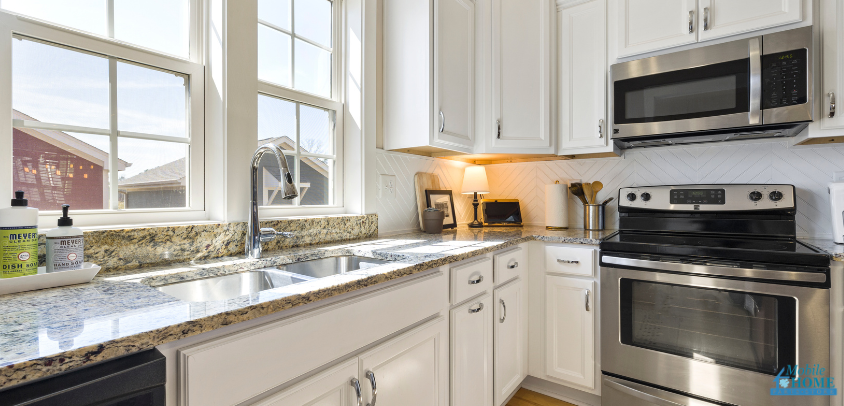
The other common setup is a range hood above the cooktop. In that design, the hood catches rising steam, smoke, and grease, and the exhaust fan pushes that air through ductwork to the outdoors.
This is the setup many people picture first when they think about kitchen ventilation. It works well because it catches heat and cooking residue close to where it starts.
In a manufactured home, a vented hood needs to discharge outdoors. It should not empty into an attic, a cabinet cavity, or a crawl space.
A hood exhaust fan usually vents:
- through an exterior wall
- through the roof
- through upper cabinetry and then out to an exterior wall
The path may look different from one kitchen to another, but the air still needs to leave the home completely.
Why a Kitchen Exhaust Fan Needs to Vent Outdoors
Cooking air has to leave the home, not just move somewhere else. If it gets dumped into an attic, crawl space, or cabinet cavity, the moisture and grease still end up trapped inside the structure. That can leave residue on hidden surfaces and create moisture problems you may not notice right away.
A properly vented exhaust fan sends that air outside instead of dumping it into another enclosed part of the home.
The vent path also affects how well the fan performs. A long duct run, several sharp bends, or grease buildup inside the duct can slow airflow and make the exhaust fan less effective. So if a kitchen fan seems weak, the motor may not be the only problem. The vent route itself may be holding it back.
What a Backdraft Damper Does
The backdraft damper is a small part of the vent system, but it does an important job. It is the flap inside the vent that opens when air is pushed out and closes when the fan turns off.
When it closes the way it should, it helps stop outside air from coming back through the vent opening.
Without a working damper, outside air can move back through the vent, which can make the kitchen feel drafty and reduce the fan’s overall performance.
A working damper helps reduce:
- cold drafts near the fan or hood
- outside air leaking into the kitchen
- wind noise through the vent opening
If the damper sticks open, you may notice cold air near the hood in winter, a rattling sound after the exhaust fan shuts off, or a vent that always feels drafty. If it sticks closed, airflow drops and the fan cannot push air outside the way it should.
Understanding the 100 CFM Requirement for Kitchen Exhaust
CFM stands for cubic feet per minute. It is a measurement of how much air a fan can move.
For manufactured home kitchens, the minimum requirement is 100 CFM. The exhaust fan needs enough power to clear heat, moisture, and cooking odors while you cook, not just move air around the room.
A lot of confusion comes from reading general ventilation advice that does not separate site-built homes from manufactured housing. In some broader standards, lower airflow numbers may apply to other kinds of fans in other parts of a home. Kitchen ventilation in manufactured housing is more specific. The fan needs enough power to remove heat, humidity, odors, and airborne grease from a working kitchen.
A replacement fan can look like a match and still fall short if it is ductless, underpowered, or not sized for the existing vent path.
When checking a replacement exhaust fan, look at:
- the product label
- the specification sheet
- whether it is ducted or ductless
- whether the airflow rating meets the kitchen’s needs
What About Ductless Range Hoods?
This is one of the most common points of confusion.
A ductless range hood does not send air outdoors. Instead, it pulls air through filters and recirculates it back into the kitchen. Some units use charcoal filters to reduce odors and catch some grease.
That may help with some particles in the air, but it does not remove heat or moisture from the home. Steam still stays indoors, and the air never actually leaves the kitchen.
A hood only meets the requirement if it removes air from the home. A recirculating unit may filter some grease, but it does not vent moisture outdoors.
If you are trying to figure out whether a hood is ductless, common clues include:
- no duct pipe above the hood
- charcoal filters inside the unit
- vent slots on the front or top of the hood
- air blowing back into the room when the fan runs
It helps to check how the unit works instead of assuming every hood handles ventilation the same way. In a manufactured home, the kitchen needs an exhaust fan system that sends air outside.
Signs Your Kitchen Exhaust Fan May Need Attention
Kitchen ventilation problems usually show up gradually. You may notice more odor after cooking, more grease on nearby surfaces, or moisture that hangs around longer than it used to.
Common signs of trouble include:
- steam hanging in the kitchen after cooking
- cooking odors moving into other rooms
- grease film on cabinets or nearby light fixtures
- sticky surfaces above the range
- moisture collecting on nearby windows
- louder fan noise with weak airflow
- cold drafts around the hood or wall vent
Sometimes the issue is nothing more than clogged grease filters. In other cases, it may be a worn motor, blocked duct, or faulty damper. In older homes, the exhaust fan may simply be outdated or too weak for the kitchen it serves.
What to Check Before Replacing a Kitchen Exhaust Fan
If you are replacing a kitchen exhaust fan, it helps to check a few things before buying parts.
Start with the basics:
- confirm whether the current unit vents outside
- check the airflow rating
- inspect the vent path for blockages or disconnected duct
- look at the backdraft damper
- measure the unit carefully before replacing it
For range hoods, common widths include 24-inch and 30-inch models. Measuring first can save a lot of frustration, especially when cabinet space is tight.
It also helps to check the filter condition. Grease filters need regular cleaning. When they get clogged, airflow drops and the exhaust fan cannot move air the way it should.
If the fan struggles to clear steam, sounds louder than it used to, or no longer vents outside properly, replacement usually makes more sense than trying to work around it.
Final Thoughts on Kitchen Exhaust Requirements
In a manufactured home, kitchen exhaust is not just a nice extra. It is part of how the kitchen handles moisture, odors, grease, and indoor air pollutants. Whether the setup uses a wall-mounted exhaust fan or a vented range hood, it should move at least 100 CFM and send air outside the home.
If you are repairing an older unit, upgrading a vented hood, or replacing a worn exhaust fan, the right parts make a difference. Mobile Home Parts Store carries ventilation products and replacement components designed for manufactured homes, so you can choose a system that fits your kitchen and keeps air moving where it belongs.
Tags: exhaust fans, HUD, kitchen, Kitchen exhaust fan, manufacture home, mobile home

