 SIGN-UP FOR THE MHPS NEWSLETTER!






Quick Overview
A mobile home roof typically lasts 20–40 years depending on maintenance, with most problems starting at seams, edges, or flashing. Early signs like roof rumble, small leaks, or worn coating often point to issues that can be fixed before they spread. Regular inspections and applying a roof coating for mobile homes can extend lifespan and prevent costly repairs. When problems show up in multiple areas, it is usually a sign the roof needs more than a simple patch.
Summarize full blog with:
A mobile home roof can be hard to read when something starts changing. It might get louder in the wind than it used to, or you notice a stain that was not there before. Sometimes it is moisture showing up after a hard rain, and you are left trying to figure out where it is actually getting in.
That is usually the point where you start second-guessing it a bit. Is this one small repair, or is it the start of something bigger? If water is showing up on a wall, is the roof even the source? And how do you tell the difference between normal wear and a roof that needs real attention?
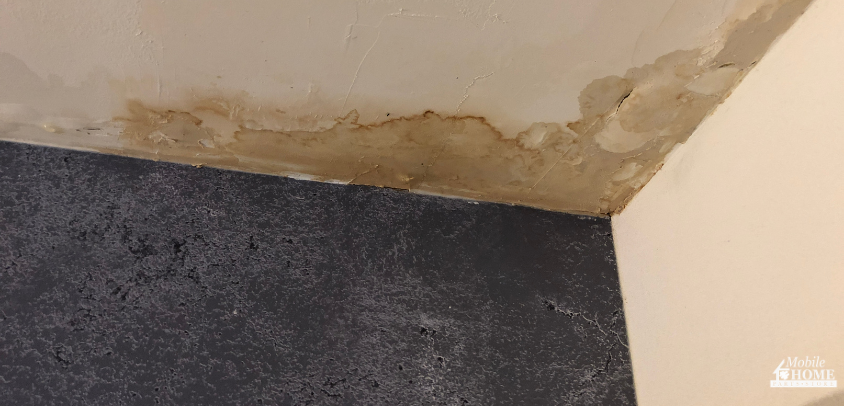
In many cases, the first sign is not the leak itself. It is the stain or damp spot that shows up later, after water has already worked its way through.
This article walks through the common questions that come up around mobile home roofing and gives you a better sense of what you are looking at before you decide what to do next.
How Are Mobile Home Roofs Different from Site-Built Homes?
A mobile home roof is not built the same way as the roof on a site-built house, and that matters any time you are talking about repairs, upgrades, or adding weight.
With a site-built home, the structure is built up from the floor. In a manufactured home roof system, the roof plays a much bigger role in how the home holds together overall. It is not just sitting up there keeping rain out. It is part of the structure itself. That is why mobile home roofing decisions usually need a little more care than people expect.
This shows up most often when someone wants to add a second roof or put trusses over the existing one. On paper, that can sound like a simple upgrade. In practice, the weight has to be handled the right way. Roofers often build in new posts or supports alongside the home so the new roof load is carried properly instead of pressing down on the original structure in places that were never meant to hold it.
That is one of the bigger things to keep in mind. A roof project on a mobile home is not only about the top surface. It is also about how that change affects the rest of the home.
What Types of Roofs Are Most Common?
Most homes have one of a few common roof setups, and each one has its own habits.
Older homes often have a low-slope metal roof. People call them flat roofs all the time, but they are not fully flat. They just do not have much pitch. Water still runs off, but not as quickly as it would on a steeper roof. That makes seams, edges, and coating more important because the roof has to work harder to keep water moving and keep moisture out.
You will see this more on older homes where the same seams and edges have taken years of sun, wind, and weather without being recoated.
Some homes have a bowed roof, where there is a gentle curve across the top. It is not a huge change visually, but it does help with runoff. Water is less likely to sit in the same places for too long, which can help reduce wear over time.
Then there are roof-over systems. That is when a new roof gets built over the old one. Some people do that after years of patching leaks. Others want better drainage or better insulation. It can be a smart move when it is designed well, but it still has to respect the structure underneath.
Knowing what kind of roof you have helps you understand what problems are more likely. A low-slope metal roof may need more frequent coating and edge checks, including the use of a roof coating for mobile homes to help protect exposed areas. A roof-over may bring its own questions about support, flashing, and how water is going to leave the roof once the new system is in place.
How Long Does a Mobile Home Roof Last?
There is no perfect number, and that is where people get frustrated. They want to know if their roof is old enough to replace, but age by itself does not tell you much.
A mobile home roof typically lasts 20–40 years depending on maintenance. If the coating has been kept up, seams have been sealed, and rust has not had a chance to spread, you may get many more good years out of it. On the other hand, a newer manufactured home roof that has been neglected can start giving you trouble much sooner.
The roofs that hold up best are often not the newest ones. They are the ones that got regular attention before small issues had time to spread.
Condition tends to matter more than the calendar. If the coating is peeling, if seams are opening up, or if water is getting in around roof edges and flashing, the roof starts aging in a hurry.
A roof-over has its own lifespan too, but that depends on the material used and how well it was built. Good materials help, but support and water control matter just as much. If runoff is poor or the new system was not framed right, you can still end up with problems earlier than expected.
Why Does Your Roof Get Loud in the Wind?
If your roof sounds like it is rattling, lifting, or humming in a windstorm, that is often roof rumble. It shows up a lot on older flat metal roofs, and if you have ever laid in bed listening to it on a windy night, you know how irritating it can be.
This tends to show up on older flat metal roofs where the edges are no longer sealed as well as they used to be.
What is happening is fairly simple. Wind is getting under the metal somewhere and moving through it. That airflow causes the roof to vibrate, and that is the sound you hear. Sometimes it sounds worse than the issue actually is, but it still points to something worth checking because air getting under the roof can turn into water getting under the roof.
You may have seen tires sitting on top of an older mobile home roof before. That is one of those older fixes people have used for years. The idea is that the weight helps hold the metal down and cut back on the vibration. It is not the prettiest solution, but people did it because sometimes it helped.
There are also screws made for securing roof panels, but that approach has a downside. Every new screw means a new hole in the roof, and every new hole is one more place that can leak later.
In many cases, the weak point shows up near the edge, flashing, or another transition area where air can get in first.
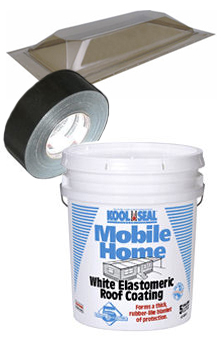
That is why coating and sealing are usually the better place to start. Using a roof coating for mobile homes, especially around the roof edges, is one of the more reliable ways to reduce noise and extend the life of the roof.
How Do You Know If Your Mobile Home Roof Is Leaking?
Some leaks show up clearly. You see a stain on the ceiling, a drip during a storm, or a soft spot that was not there before.
Other times, it is less obvious. Moisture might show up lower on the wall, near the baseboard, or in a corner that does not seem connected to the roof at all.
This comes up fairly often after heavy storms. Water gets in up high, then shows up much lower than you would expect.
Water rarely comes straight down. It moves through the home along whatever path it finds. That could be framing, insulation, or trim. By the time you see it, the entry point could be several feet away.
That is why it helps to look beyond the spot where the damage shows up. Check the roof edges, flashing, and anything above that area before assuming you have found the source.
Pay close attention to seams and transition points. These are common entry spots for water, and they are often sealed using materials like butyl tape or reinforced with products like Peel & Seal™.
Are Leaks Always Caused by the Mobile Home Roof?
Not always. The roof is often part of the problem, but it is not always the only part of a mobile home roofing issue.
Flashing issues are a common cause. If flashing along the roofline is not doing its job, water can work its way in and then travel down inside the wall. Gutters also play a role. Without them, rainwater runs down the side of the home, and in heavy storms, that can push water into areas it would not normally reach.
This tends to show up on homes where water has been running down the same exterior wall for a while.
Windows are another place to check. If the seal around a window has failed, water can get in there and show up inside in a way that looks like a roof leak.
Some manufactured homes also have less protection behind the siding than people expect. If there is no exterior sheathing or wrap, water that gets past the siding has a much easier path inside.
So when you are tracking down a leak, it helps to look at the full path water might be taking, not just the roof surface.
When Does a Roof Repair Make Sense vs. Replacement?
This usually comes down to how often the problem shows up and how spread out it is.
If one seam has opened up or one section of coating has worn down, a focused mobile home roof repair can take care of it. You fix that area, seal it properly, and keep an eye on it.
Sometimes a single trouble spot really is just that. One spot. But when repairs start showing up in different areas, that is usually when the roof is pointing to something bigger.
If you start fixing one spot and then another issue shows up somewhere else a short time later, that is a different situation. At that point, it is less about one weak spot and more about overall wear across the roof.
That is when it makes sense to look at the roof as a whole. In some cases, that leads to a full recoating using a roof coating for mobile homes. In others, it leads to a larger repair plan or a roof-over.
Can You Install a New Roof Over an Existing One?
You can, but it needs to be done with the structure in mind.
A mobile home roof is not designed to carry unlimited extra weight. That is why roofers often add posts or supports along the home when installing a new roof system. The goal is to carry that load properly instead of placing it all on the original roof.
Material choice matters here too. Lighter systems are often used in mobile home roofing projects to reduce stress on the home. But even with lighter materials, the support plan still needs to be there.
A well-designed roof-over can solve a lot of problems. One that is not planned carefully can create new ones.
How Do You Tie an Addition Into a Mobile Home Roof?
This is one area where the details matter more than people expect.
When an addition is built onto a mobile home, it should be self-supporting. That means it stands on its own and does not rely on the home to carry its weight.
Where the two roofs meet, the goal is to seal them together in a way that directs water away from that connection. That is usually done by creating a valley between the two rooflines and using flashing and roofing material to guide water off the roof.
That connection point is one of the most common places for leaks if it is not done right. When it is handled well, water moves off cleanly. When it is not, water tends to collect and work its way in.
How Often Should You Inspect and Maintain Your Roof?
Regular mobile home roof maintenance makes a bigger difference than most people expect.
Checking the roof a couple times a year is a good habit. Spring and fall are a good place to start. After strong storms or high winds, it is worth taking another look.
This is especially important on older flat or low-slope roofs, since those tend to show wear at seams and edges first.
After a hard rain, moisture issues are often easier to spot, especially around edges and transition points.
You are not looking for perfection. You are looking for changes. Worn coating, loose edges, rust starting to show, or areas where water might sit longer than they should. Keeping up with mobile home roofing maintenance, including periodic recoating, helps extend the life of the roof.
Inside the home, keep an eye on ceilings and walls too. Stains, soft spots, or new odors can be early signs that something is going on above.
Staying ahead of those small changes is what keeps repairs manageable.
When One Small Issue Starts to Turn Into More
A mobile home roof will usually give you a few signs before something turns into a bigger problem. It might be noise in the wind, a section that keeps needing attention, or moisture showing up where it does not quite make sense at first. Those early changes are worth paying attention to, especially if the same issue keeps coming back.
In many cases, the roof is not failing everywhere. It is just starting to show wear in the areas that tend to go first.
If one spot is giving you trouble, that is usually a repair. If different areas start acting up over time, it helps to look at how the entire roof is holding up instead of focusing on one location.
When you are getting into mobile home roof repair or staying ahead with regular mobile home roof maintenance, Mobile Home Parts Store has the coatings, sealants, flashing, and roofing supplies to help you take care of it with confidence.
Tags: mobile home roof, mobile home roof repair, roof repair

