 SIGN-UP FOR THE MHPS NEWSLETTER!









Quick Overview
A well-designed mobile home porch improves everyday entry by adding stable landing space, better movement flow, and weather protection. Focus on proper sizing, practical layout, durable materials, and code-compliant steps to create an entry that is safer, easier to use, and built to last.
Summarize full blog with:
Most mobile home entries are built to be functional first. Steps, a landing, a door, and that is about it. It works, but once you start carrying groceries, dealing with rain at the threshold, or trying to stand at the door without edging too close to the step, that setup can start to feel cramped.
That is when a porch starts to feel less like an extra and more like an upgrade that solves a problem. It gives the entry more breathing room, makes it easier to move in and out of the home, and gives you a better place to stand, turn, and carry things in. Even a simple porch can also help the front of the home look more finished and better connected to the rest of the exterior.
Of course, a porch does not need to be large or elaborate to work well. What matters most is how it fits the home, how it handles daily use, and whether the layout and materials will hold up over time. When you look at it that way, planning a porch becomes less about adding something new and more about improving one of the most used parts of the home.
Start With the Mobile Home Entry
It is easy to focus on railings, lighting, or planters first. Those details have their place, but they are not what makes a porch work.
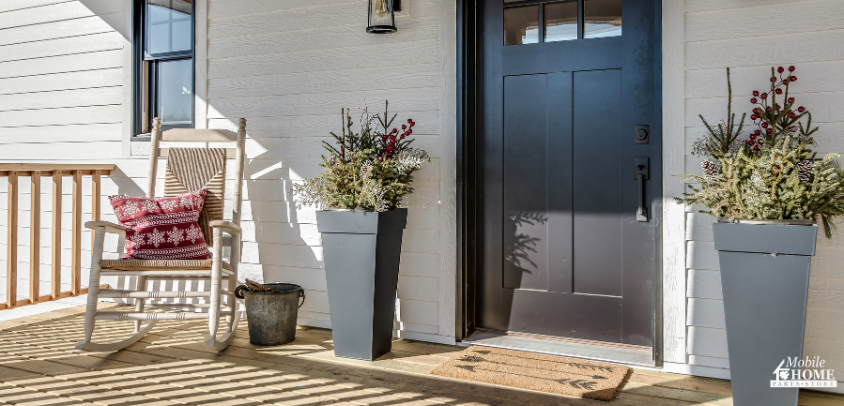
Start at the exterior door. Look at the height from the threshold to the ground. Check the door swing. Pay attention to where people step, turn, and carry things in. If the landing feels tight or the drop from the door feels abrupt, that problem needs to be addressed before you choose materials.
That is where a lot of porch plans miss the mark. They get treated like a visual upgrade when the home really needed a better entry. A mobile home porch should make it easier to get in and out first. You need enough landing space to stand at the door, enough width to move without turning sideways, and enough support underfoot that the entry feels steady every time you use it.
Once the layout works, the extras start to make sense. Maybe you want space for a chair. Maybe you want coverage to keep the threshold drier. Maybe you want the front of the home to feel more finished. Those decisions land better once the entry itself works.
How Big Should a Mobile Home Porch Be
Porch size depends on how you plan to use the space and how your entry is set up.
At a minimum, it should give you enough room to stand at the door and move without stepping back onto the top step. That means looking beyond the width of the door alone. The porch should account for the door swing, give you room to shift to one side, and leave enough space to carry items in without feeling boxed in.
For a basic entry, a small landing may be enough. If you want seating, planters, or a more comfortable place to stand, though, the porch needs more depth so those additions do not cut into the walking path.
It also helps to look at the height of the home. A higher entry usually benefits from a slightly larger landing because the transition from steps to door feels more stable.
The goal is not to build bigger than you need. It is to build something that feels balanced and easy to use every time you come and go.
Mobile Home Porch Layout Ideas
A good porch layout should make the entry easier to use, not just give you more space to fill. The best setup usually depends on how much room you have, how people move through the entry, and whether the porch adds function without getting in the way.
How to Use a Small Porch Well
If the porch has limited foot traffic, keep the walking path open first. A simple rectangular landing usually works better than trying to squeeze too much into a tight area. If you want to add a chair, planter, or small bench, place it where it will not interfere with the door swing or force people to step around it.
Built-in seating or storage can still make sense on a small porch, especially if you need a place for shoes, packages, or a few everyday items. The key is making sure those features do not crowd the entry. A small porch works best when stepping up, turning, and getting through the door still feels easy.
Large Mobile Home Porch Ideas
If you have more room to work with, it helps to think in zones. Keep the area closest to the door open for daily traffic, then use the extra square footage for seating, plants, or other outdoor use. That keeps the main entry from feeling blocked by items that do not need to sit right at the threshold.
A deeper porch can also make the entry feel more stable, especially on homes with a higher door height. More landing space gives you a better transition from steps to door and makes the setup easier to use when your hands are full.
Keep the Porch Layout Simple
A porch should look like it belongs with the home, but that does not require a lot of decorative detail. Clean lines, balanced railings, and materials that fit the home usually matter more than extra design elements. Simpler layouts also tend to be easier to build, easier to maintain, and less likely to feel dated later.
What matters most is that the porch fits the entry, supports daily use, and holds up well over time. If it feels comfortable to move through and works the way you need it to, it is doing its job.
When to Add a Covered Porch
A covered porch can make a big difference when the entry takes a lot of direct weather. Rain, snow, and constant moisture at the door can leave the landing slick and harder to use. Adding a roof over that area gives you a drier place to unlock the door, carry things inside, or step out without landing right into wet footing.
It also makes the entry more comfortable to use day to day. You are not standing in the weather while opening the door, and the landing does not take the same direct exposure over and over. Over time, that can help reduce wear around the doorway and top step, where problems often show up first.
Water still needs somewhere to go, though. If runoff drops near the steps or collects around the base of the porch, you can end up with muddy ground, washout, or standing water in a spot you use every day. That is why drainage and grading should be part of the roof plan from the start, not something left until after the porch is built.
Once the runoff is headed in the right direction, the next decision is choosing materials that can handle the weather, foot traffic, and level of upkeep you want.
Best Mobile Home Porch Materials
When you start planning a mobile home porch, material choice usually comes down to three things: upkeep, weather exposure, and the finished look.
Composite Decking for a Porch
Composite decking works well if you want a porch that stays in good shape without a lot of yearly maintenance. It is usually made from a mix of wood fibers and recycled plastic, and it is designed to resist decay, termites, warping, cracking, and splintering better than traditional wood. It also comes in a range of colors and finishes, which makes it easier to match the porch to the home.
The tradeoff is cost. Composite usually costs more up front, and darker boards can get hotter in direct sun. Even so, many homeowners like that it does not need the same sanding, staining, or sealing routine that wood does.
Traditional Wood Porch Options
Wood is still a solid choice, especially if you want a more natural look or need to keep the starting cost lower. Pressure-treated lumber remains a common option because it is affordable and made for outdoor use. Cedar and redwood are also popular since they offer natural resistance to moisture, rot, and insects while giving the porch a warmer appearance.
The drawback is maintenance. Wood needs more attention over time, including regular cleaning, inspections, and periodic staining or sealing to protect it from moisture, sun exposure, and everyday wear.
For most homeowners, there is no one best material in every situation. Composite makes sense when low upkeep matters most. Wood makes sense when budget, appearance, and flexibility during the build matter more.
Mobile Home Porch Steps and Railings
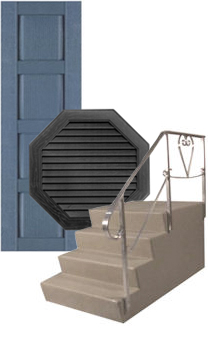
Not every mobile home porch needs the same setup. In some cases, prefab fiberglass steps are enough to improve access and keep the project simpler. In others, a built porch makes more sense because you need more landing space, want a covered entry, or need the steps to line up better with the door and the yard. Some homeowners end up doing both, using a built landing with fiberglass steps to get a setup that feels more finished and easier to use.
Mobile Home Step Code Basics
No matter which direction you go, the step layout still matters. For manufactured homes, HUD sets a maximum riser height of 8 1/4 inches and a minimum tread depth of 9 inches, and the step sizes need to stay consistent from top to bottom. That matters because uneven steps are one of the quickest ways to make an entry feel awkward or unsafe.
You’ll also want to think through the landing and railing layout. There should be enough room to step out, open the door, and move safely, and if the stairway has four or more risers, HUD requires at least one handrail. HUD also requires a landing at the top and bottom of each stairway, with at least 36 inches in the direction of travel.
Before you build, check local code and permit requirements too. HUD covers manufactured home standards, but site-built porches, stairs, and railings may also need to meet local rules for layout, support, and safety.
Build a Better Mobile Home Entry
A porch does not have to be large or elaborate to make a noticeable difference. When the landing feels steady, the steps feel right, and the layout gives you enough room to move through the door comfortably, the whole entry works better.
That is usually what matters most in the long run. Not how much you added, but whether the porch makes daily use easier and holds up the way you need it to.
If you are getting ready to build or upgrade your entry, Mobile Home Parts Store is here to help you find the steps, materials, and parts that fit your home.
Mobile Home Porch FAQ
Do you need a permit for a mobile home porch?
+
What is the best material for a mobile home porch?
+
How big should a mobile home porch be?
+
Can you use prefab steps with a porch?
+
How much does a mobile home porch cost?
+
How much maintenance does a porch require?
+
What adds the most value to a porch project?
+
Tags: mobile home, mobile home deck, mobile home porch, mobile home steps

