 SIGN-UP FOR THE MHPS NEWSLETTER!









Quick Overview
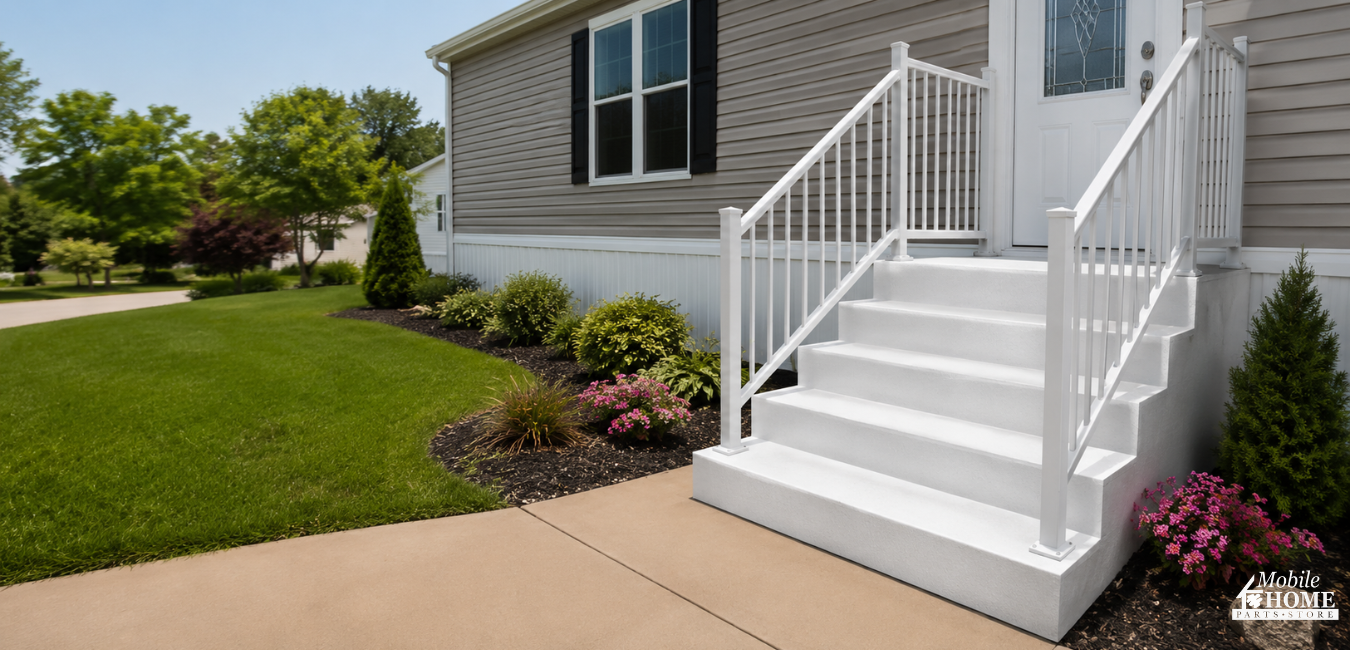
Mobile home fiberglass steps resist rot and rust in a way wood and untreated metal cannot, making them a low-maintenance option for entry stairs. Standard rise should stay at or under 7.75 inches per step with a run of at least 10 inches, and steps need to be rated for the height and width of the specific entry. Installation involves setting a stable base, securing the unit to the home’s frame, and checking level before final anchoring.
Wood steps rot. Untreated metal rusts and gets slick with condensation. Mobile home fiberglass steps sidestep both problems, holding up to weather without the yearly upkeep that wood entry stairs demand or the corrosion issues that come with bare metal. For an entry point that gets used multiple times a day in every kind of weather, that durability difference adds up fast.
This guide covers how to size mobile home fiberglass steps correctly, what installation involves, and how to keep a set performing well for years.
Why Fiberglass Holds Up Better Than Wood or Metal
Wood steps need regular sealing or repainting to resist moisture, and even with maintenance they eventually rot at ground contact points or where fasteners create entry points for water. Bare or lightly coated metal steps rust over time, especially in humid climates, and can develop a slick surface when condensation forms in cold weather.
Mobile home fiberglass steps do not rot, rust, or require repainting. The gel-coat finish holds color well under UV exposure, and most units include a textured surface built into the tread itself for slip resistance, rather than relying on a coating that wears off.
Sizing Mobile Home Fiberglass Steps Correctly
Step sizing comes down to three measurements: the total rise from ground to the entry threshold, the number of steps needed, and the width of the doorway they serve. Most building standards call for a maximum rise of 7.75 inches per step with a minimum run, the depth of each tread, of 10 inches. Steps that run steeper than this are harder to climb safely and can be a fall hazard, especially for older residents or in wet or icy conditions.
Measure the exact distance from the ground to the bottom of the entry door threshold before ordering. A pre-built fiberglass step unit sized even an inch off can leave an uneven final step or a gap that needs shimming, neither of which is a safe long-term fix.
Installing Mobile Home Fiberglass Steps
1. Prepare a Stable, Level Base
Steps need to sit on ground that will not shift or settle unevenly. A compacted gravel pad or a poured concrete pad both work well. Avoid setting steps directly on bare soil that can wash out or heave with freeze-thaw cycles.
2. Position the Steps Against the Home
Set the unit against the entry point and check that the top step aligns correctly with the threshold height. Some adjustment is normal even with correctly measured units, since ground settling varies.
3. Secure to the Home’s Frame
Most mobile home fiberglass steps attach to the home’s frame or a ledger board near the entry using brackets designed for the specific step model. This keeps the steps from shifting away from the home over time, which is a common failure point with unsecured units.
4. Check Level and Adjust
Use a level across each tread and adjust shims at the base as needed before final anchoring. An unlevel step is both a trip hazard and a sign the unit will settle unevenly over time.
Maintaining Fiberglass Steps
Fiberglass steps need far less upkeep than wood or metal alternatives, but they are not entirely maintenance-free. Check the anchoring brackets once or twice a year to confirm nothing has loosened from ground shifting or frequent use. Clean the tread surface periodically, since accumulated dirt or algae can reduce the built-in slip resistance over time, particularly in shaded or damp locations.
Inspect the gap between the top step and the entry threshold seasonally. Ground settling can widen this gap slowly, and a growing gap is worth addressing before it becomes a trip hazard or lets water track under the entry door.
Mobile Home Fiberglass Steps FAQs
How many steps do I need for my mobile home entry?
Divide the total rise from ground to threshold by 7.75 inches, the maximum recommended rise per step, to find the minimum number of steps needed. Round up rather than down for safety.
Are fiberglass steps better than wood for a mobile home?
For durability, yes. Fiberglass resists rot and does not need repainting or sealing the way wood does, which makes it a lower-maintenance choice over the life of the steps.
Can I install mobile home fiberglass steps myself?
Yes, most units are designed for straightforward DIY installation once the base is prepared and level. Securing the steps to the home’s frame is the step most worth taking time on.
Do fiberglass steps need a handrail?
Most local codes require a handrail for stairs with more than 2 or 3 risers. Check your local requirements, since this varies by jurisdiction and step height.
How long do fiberglass steps last?
With proper installation on a stable base and basic anchoring checks, fiberglass steps commonly last 15 to 20 years or more, well beyond the typical lifespan of untreated wood steps.
A properly sized, securely anchored set of mobile home fiberglass steps is a durable upgrade that saves years of repainting or rust repair. Browse Mobile Home Parts Store’s steps and exterior improvement supplies to find the right fit for your entry.

