 SIGN-UP FOR THE MHPS NEWSLETTER!









Moisture has a way of sneaking up on you. It doesn’t always make a dramatic entrance—like a burst pipe or flooded crawlspace. Sometimes, it’s quiet. Subtle. A little condensation on the window, a musty smell in the closet, or a soft spot in the floor that didn’t used to be there.
In a manufactured home, those small signs can snowball into big problems fast. So, if you’re dealing with excess moisture—or trying to prevent it—this article is for you. We’ll break down where moisture is coming from, why it’s more of an issue in manufactured homes, and what you can do to reduce it with practical, do-it-yourself tips that make a real difference.
Let’s get into it.
Everyday Life Adds Moisture—More Than You Think
We tend to think of water damage as a dramatic event. But most of the time? It’s the result of everyday stuff:
- Cooking dinner.
- Taking a shower.
- Running the dryer.
- Mopping the floors.
- Even breathing adds water vapor to the air. (Seriously. Look it up.)
In most homes, that moisture can escape through vents, gaps, or natural airflow. But in a manufactured home—where energy efficiency and tight seals are the norm—all that moisture tends to stay put. And over time, it settles into the walls, floors, or ceiling, setting the stage for mold, mildew, and structural issues.
Why Mobile Home Ventilation Is So Important
Manufactured homes are built differently than site-built homes. That’s not a bad thing—it’s just something to work with.
They’re designed to be tight, energy-efficient, and cost-effective. However, that tight construction can trap humidity inside, especially if the home doesn’t have proper mobile home ventilation. Without it, moisture has nowhere to go.
So, while you’re keeping warm in winter or cool in summer, you might also be creating the perfect storm for condensation, rot, or mold if airflow isn’t part of the equation.
What Moisture Can Do (If You Let It)
Moisture doesn’t stay in one place. It travels, seeps, and settles. And when it does, it causes:
- Mold and mildew affect air quality and can trigger allergies or asthma.
- Rotting wood and warped materials, especially in flooring and framing.
- Peeling paint or bubbling walls which are usually signs of a deeper problem.
- Musty odors that linger no matter how much you clean.
- HVAC strain is caused by humid air taking more energy to cool.
Like most home issues, the longer you wait, the more expensive it gets. Addressing mobile home ventilation early is a lot cheaper than replacing floors and walls.
8 Practical Tips to Reduce Moisture Problems
1. Make the Most of Mobile Home Ventilation
Fans aren’t just for comfort—they’re your first line of defense against indoor humidity.
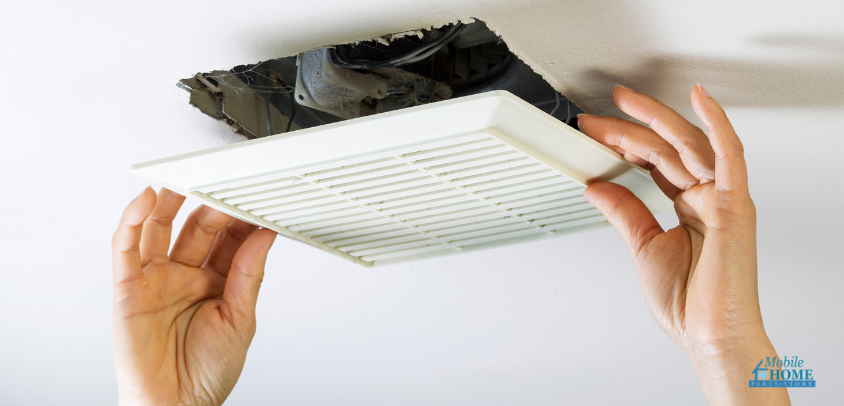
- Turn on your bathroom fan before you shower. Leave it running for 20 minutes afterward.
- Use your range hood every time you cook—even if you’re just boiling water.
- Crack a window while mopping or using chemical cleaners.
- If you have rooms or closets you don’t use often, open the doors occasionally and let the airflow.
Mobile home ventilation isn’t about overthinking—it’s about consistency. Keep the air moving, and you’ll keep moisture in check.
2. Avoid Oversized HVAC Systems
A bigger air conditioner doesn’t necessarily mean better. If your system is too large, it cools your home too quickly—without running long enough to remove humidity from the air.
HUD even notes that oversized systems “turn on and off frequently, allowing humidity to build up indoors.” Proper sizing is key, especially in a space with limited mobile home ventilation options.
3. Keep Filters Clean and Airflow Strong
Dirty filters don’t just mess with air quality—they interfere with your system’s ability to remove moisture.
- Check filters monthly and replace them every 1–3 months.
- Pleated filters help with both dust control and dehumidification.
- Make filter checks part of your regular routine—it’s easy to forget until there’s a problem.
4. Vent All Fuel-Burning Heaters to the Outside
Propane and kerosene heaters release a surprising amount of moisture. Every gallon of fuel adds roughly a gallon of water vapor into your home’s air.
If that vapor isn’t getting pulled out with proper mobile home ventilation, it’s settling into your walls and floors. And, of course, you also need to vent these heaters to avoid carbon monoxide buildup.
5. Don’t Block Vents or Close Off Rooms
It might feel logical to shut off rooms you’re not using, but it actually creates cold zones where moisture can collect and condense.
Likewise, avoid covering floor registers with furniture or rugs. Good airflow is crucial for keeping humidity levels balanced—and proper mobile home ventilation helps make that happen.
Moisture Below the Surface: Crawlspaces and Drainage
6. Improve Site Drainage Around Your Home
After a big rain, walk around your home. Do you see standing water near the foundation? That water can seep under your home and create long-term moisture issues.
Solutions range from regrading the soil to adding gravel or even installing a French drain. The goal: keep water moving away from your home, not toward it.
7. Manage Your Crawlspace Environment
Out of sight doesn’t mean out of mind. Crawlspaces are common sources of moisture buildup.
- Use heavy-duty plastic or vapor barriers to block ground moisture.
- Make sure your dryer vents to the outside—not into the crawlspace.
- Inspect plumbing and fittings regularly to catch slow leaks early.
Even a few drops a day add up fast in a closed space without proper mobile home ventilation underneath.
8. Vent Your Skirting the Right Way
Skirting helps protect the underside of your home—but if it’s sealed too tight, it traps damp air.
Use this formula: 1 square foot of venting for every 150 square feet of skirting. And always place vents within 3 feet of each corner. This setup allows for cross-ventilation, which is essential for keeping the area dry and breathable.
Think of skirting vents as another part of your mobile home ventilation system—they matter just as much as fans and filters.
Watch for These Moisture Red Flags
Don’t wait until there’s visible mold or major damage. Keep an eye out for:
- Condensation on windows
- Musty or damp smells
- Peeling paint or stains on walls and ceilings
- Warped flooring or soft spots
- Water pooling under the home
The earlier you catch it, the easier—and cheaper—it is to fix. Better mobile home ventilation now can prevent a major repair later.
Final Thoughts: Stay Ahead of the Moisture Game
You don’t have to overhaul your whole home to solve moisture issues. In most cases, it’s about routine upkeep, airflow, and a little attention to the spots we often forget.
Whether it’s fans, filters, vents, or vapor barriers—smart mobile home ventilation can protect your home from long-term damage. And if you need quality supplies to make it happen, Mobile Home Parts Store has everything from vent fans to crawlspace materials, built specifically for manufactured homes.
Stay ahead of the moisture—and your home will thank you for it.
Tags: mobile home vent, mobile home ventilation, vent, ventilation

