 SIGN-UP FOR THE MHPS NEWSLETTER!






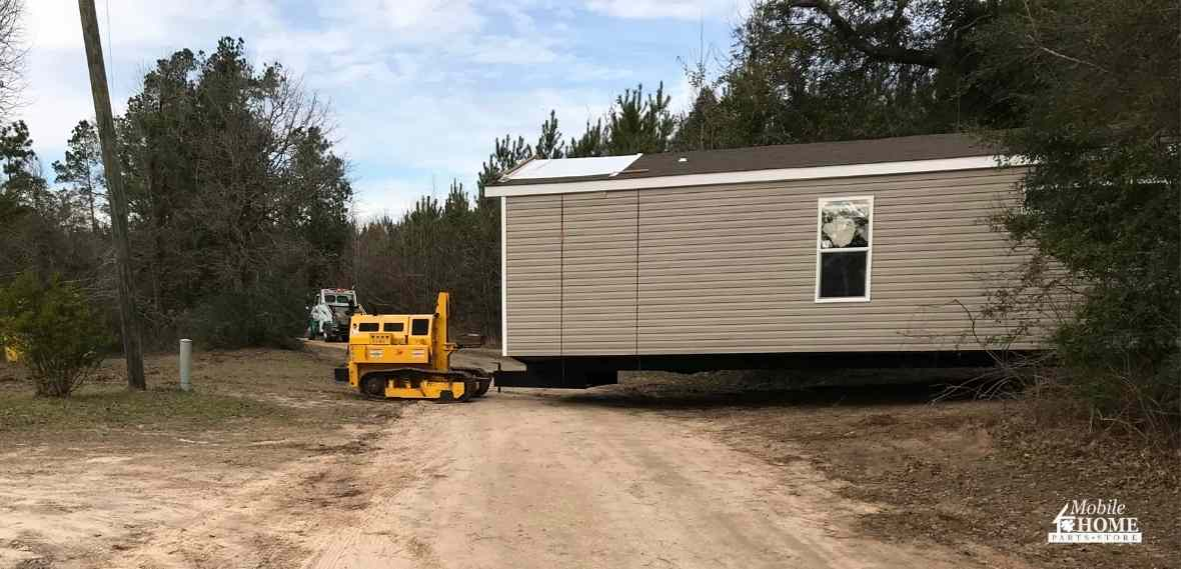
Setting up a manufactured home brings you face-to-face with the ground it will rest on. Maybe you’re looking at firm soil that barely shifts, or maybe you’re dealing with softer earth, standing water after storms, or a site that catches more wind than you expected. It also helps to understand how each mobile home foundation handles support, moisture, and anchoring on the kind of ground you’re working with. All of those pieces play a role in how the home will sit and how well it will hold its shape over the years.
Foundation systems take different forms because each one tackles a specific challenge. Some offer better support on uneven soil, some help keep moisture under control, and others make under-home access easier for future repairs. The goal is simply to match the foundation to the conditions you’re working with and the way you plan to use the home.
What follows is a look at the foundation styles you’ll see most often and the site details that tend to guide the choice—so you can plan the setup with confidence and know what to expect before the home is placed.
Permanent vs. Non-Permanent: Mobile Home Foundation Classification
“Permanent” can mean different things depending on your lender, insurer, or local office. Most base that definition on durable materials—such as concrete, mortared masonry, or treated wood—and on anchorage that creates a lasting connection to soil or rock rather than simply resisting wind.
HUD’s Permanent Foundations Guide makes an important distinction: auger-style, screw-in soil anchors are common, but they do not meet HUD’s definition of permanent anchorage on their own. That doesn’t automatically make them a poor choice. It means the system may not qualify as “permanent” for documentation, financing, or titling purposes.
If permanence is part of your plan, bring it up early. It affects design, engineering sign-off, and inspections. It also changes who you hire, because not every installer works with systems that need stamped plans and lender-ready documentation.
Site Conditions That Shape Your Foundation Choice
Before picking a system, look at what the site will tolerate. The right mobile home foundation starts with soil, water, climate, and wind—not a standard template.
Soil Bearing Capacity and Settlement Risk
Soil needs enough strength to carry the load without compressing unevenly. HUD describes soil bearing capacity as a measure of soil strength and notes it often falls in a general range of 1,500–4,500 pounds per square foot (psf). If the soil is loose, organic, or recently disturbed, settlement becomes more likely after setup. That’s when floors feel less level, doors start sticking, and shims end up doing more than they should.
Pad placement matters as much as pad size. Pads should sit on compacted or undisturbed soil. Clear loose fill, debris, and soft material first. HUD warns that skipping this prep can lead to uneven settlement.
Drainage and Water Flow Around the Home
Water control protects every foundation style. Open pier systems can shift if runoff erodes soil around footers. Enclosed crawl spaces can trap moisture if water is allowed to collect under the home.
HUD calls for final grading that moves water away from the home. A commonly used rule is a slope away from the perimeter for about 3–5 feet, with local code taking priority. Gutters and downspouts often become part of the fix because roof runoff can concentrate water along a narrow strip right where supports and footers need stable soil.
Frost Depth and Seasonal Ground Movement
In cold climates, frost heave can lift soil and nudge supports out of position if footings or slab edges are not designed for it. Two approaches are widely used:
- Placing footings and critical support elements below the local frost depth where required
- Using frost-protected designs that rely on insulation and drainage to reduce freezing at slab edges
You want support that stays consistent through the seasons, not a setup that shifts every winter.
Wind Zones, Tie-Down Straps, and Anchoring
Support carries the weight. Anchoring handles forces that want to lift or slide the home. HUD notes that manufacturers specify strap and anchor spacing based on home size and HUD wind zone. Tie-down straps between the I-beams and anchors are required in all wind zones. In higher wind zones (HUD Zones II and III), vertical sidewall straps are also required along with I-beam straps.
This is a common place where installs get close but still miss. The posts and pads may look solid, but the strap layout still has to match the home and wind zone.
Under-Home Clearance for Utilities and Repairs
Under-home access affects normal maintenance. Plumbing repairs, duct adjustments, insulation work, and inspections all get easier when the plan leaves workable clearance and a path to key areas. Ignoring access tends to turn routine repairs into longer, more expensive jobs.
Pier-and-Anchor Systems: A Common Mobile Home Foundation
Pier-and-anchor systems are widely used because they adapt to many sites and can be installed efficiently. HUD describes this as a long-standing support and anchorage method that does not require extreme dimensional precision.
Pier Types and Footing Pads
In a typical configuration, installers place piers under the main beams, along the mating line for multi-section homes, and at other points the manufacturer specifies. Depending on the design, they may also add perimeter piers.
HUD notes common pier types such as:
- Steel jack stands
- Hollow-core concrete masonry blocks stacked vertically
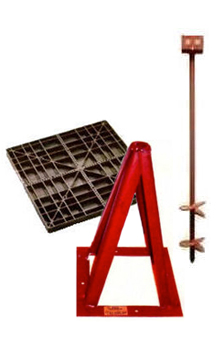
Piers generally sit on square footers or pads that distribute the load over a larger area. Pads may be poured concrete, precast concrete, treated wood, ABS, or other locally approved materials.
Pier Spacing and Safe Pier Heights
Pier spacing often lands in the 5–10 foot range, depending on the home design, soil conditions, and roof snow load. Spacing changes the load each pier carries and influences how substantial the pads need to be.
HUD is also direct about pier height:
- Use double block piers for any concrete block pier taller than 36 inches.
- Have a registered engineer design any pier taller than 80 inches.
Taller stacks increase the chance of movement unless the design accounts for it.
Ground Anchors, Straps, and Re-Checks
HUD describes auger-type ground anchors as the most common device for resisting wind uplift, attached to the frame I-beams with steel straps. It also notes a practical maintenance point: manufacturer manuals often recommend periodic strap checks to confirm tension.
Stabilizer plates can be used with anchors to reduce movement at the anchor head and improve performance.
Common Installation Issues to Avoid
HUD’s comparison table identifies this system as low in initial cost, quick to install, and outside the guide’s definition of a real property foundation
Issues tend to show up when:
- Crews place pads on disturbed soil that later settles.
- Installers overlook drainage, allowing runoff to erode the support areas.
- Some setups use straps that don’t match the wind-zone requirements.
- Builders stack piers too high without using the correct configuration.
Runner and Grade-Beam Options for a Mobile Home Foundation
Runner and grade-beam styles use longer, continuous elements to support the home along key paths instead of relying only on point supports. These can take different forms, including reinforced concrete runners, continuous footers, and perimeter systems that combine a crawl space layout with more continuous support.
HUD includes crawl space case studies that use continuous footers and reinforced runners, with anchors set into concrete rather than relying only on soil-driven anchors. One example uses 16-inch-wide concrete footers with 16-inch transverse runners reinforced with rebar, poured onto compacted soil, and anchors set into the concrete.
Why Continuous Support Paths Are Used
Continuous elements help distribute loads more evenly and can perform well in a wider range of soil conditions. Anchors set into concrete can also improve uplift resistance compared to soil-driven anchors.
When Runner and Grade-Beam Systems Fit Best
These systems often make sense when:
- The site allows an accurate layout for continuous elements.
- Local conditions call for footers or perimeter elements to extend below frost depth.
- The project aims to rely more on concrete-set anchorage points rather than soil-driven anchors.
Concrete work still depends on layout, prep, and drainage. If water collects along runners or perimeter walls, shifting and cracking can follow.
Crawl Space Foundations: Built-In Access and Moisture Control
Crawl space foundations are often chosen for the balance they offer: more enclosure than open piers, better control of under-home conditions, and defined access for utilities and inspections.
Moisture Barriers, Drain Tile, and Venting
HUD is clear that a crawl space needs a moisture plan. In its case studies, a solid approach often includes:
- Ground moisture barrier: HUD describes 6-mil polyethylene sheeting used as a ground moisture barrier in crawl space examples.
- Drainage measures: One case study uses a 4-inch perforated pipe placed adjacent to the perimeter and covered with crushed rock.
- Ventilation: Local codes set the required vent area for the site and often call for features like thermostatically controlled vents in the foundation walls.
In colder regions, vent timing can change everything. Vents that stay open at the wrong time can create freezing issues; vents that never function can trap moisture.
Perimeter Footings and Frost Protection
HUD includes crawl space examples where perimeter footings extend below the local frost line to reduce heaving. In a market with a frost depth of around 24 inches, the case study notes frost protection achieved through footing depth, along with moderate backfill. This is a system choice, not a single detail.
Slab-on-Grade: A Mobile Home Foundation Built as a Concrete Platform
Slab systems are typically designed as stable platforms that can speed setup and create a clean base for anchoring and enclosure options.
Frost-Protected Slab Basics
HUD describes “shallow frost-protected” slabs that use insulation at the slab edge to create a thermal barrier, reducing the chance of freezing under the slab and helping limit frost heave.
In one example, builders pour the slab to match the exterior dimensions of the home’s floor-joist assembly and thicken the concrete around the perimeter and along the long axis under the mating line. That added thickness supports the key load paths and multi-section layouts.
Base Prep and Vapor Retarders Under the Slab
HUD notes a sand bed used as the subsurface in one example (about 12 inches), with a 6-mil polyethylene vapor retarder placed over the sand before the pour. That vapor layer helps limit moisture migration through the slab.
Soil assumptions show up here as well. One design uses a 3,000 psf soil bearing capacity and notes that a lower bearing capacity would require additional reinforcing. This is also why slab work is often engineered: reinforcement is tied to site conditions.
Slab Anchoring and Documentation
A poured slab can permanently secure anchoring devices and supports many enclosure options. HUD also notes that not every slab approach meets a permanent foundation definition. Some designs use slab anchors and strapping rather than ground anchors and still do not qualify as “permanent” in the case study context. When permanence matters, documentation and design details carry the weight.
Under-Home Environment: Venting, Moisture Barriers, and Drainage
A solid foundation style does its part, but the conditions around a mobile home foundation can still cause trouble when moisture lingers.
Venting That Works Day-to-Day
Skirting vent sizing and placement should follow local code and manufacturer requirements. If vents are blocked or missing covers, moisture tends to hang around longer than it should.
Ground Moisture Barriers With Full Coverage
A ground barrier helps most when it covers the full under-home area and stays in place. Tears, gaps, and bunched material leave exposed areas where moisture can rise and spread.
Drainage Details That Protect the Support System
Standing water affects soil, supports, and air quality. HUD’s crawl space example uses a perimeter perforated pipe and crushed rock to move water away from the foundation footprint. Grading and roof runoff control matter just as much; downspouts dumping water beside a pier pad can undermine the most carefully installed supports over time.
Planning Checklist Before the Home Is Set
A decision usually comes together with a few checks:
- Ask your local jurisdiction to clarify what counts as permanent and which inspections you’ll need.
- Match support locations, strap types, and anchor spacing to the manufacturer’s requirements and HUD wind zone.
- Put grading, runoff control, moisture barriers, and vent strategy into the scope from the start.
- Ask how under-home access will work for future plumbing, HVAC, and inspections.
Support for the Parts—and the “What Fits?” Moments
Foundation decisions take time, and it’s normal to work through them step by step. As long as you keep an eye on the site, moisture, and the home’s support needs, the rest becomes easier to sort through. If you’re comparing options, it can help to write down what you already know—soil and drainage conditions, your climate, and any local requirements—so you’re making choices based on your home, not just what’s common.
When you need a specific part or you’re sorting out what fits your setup, Mobile Home Parts Store helps you find what works for your home. We guide you through gathering supplies for an under-home project or tackling everyday repairs, offering parts made for manufactured homes and support whenever you want a second set of eyes on your plan.
Tags: anchors, mobile home foundation, mobile home set-up supplies, mobile home setup supplies, Mobile Home Tie-Downs, set-up supplies

