 SIGN-UP FOR THE MHPS NEWSLETTER!








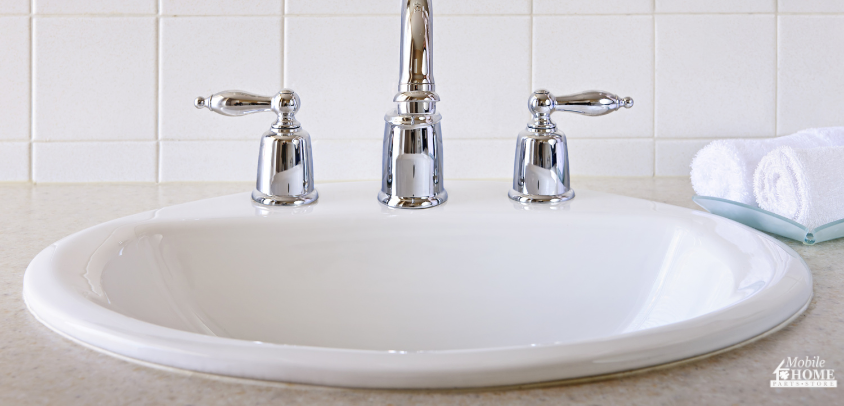
Most mobile home sink problems don’t start with a flood. They start with little tells. A drip that appears after the shutoff. A drain that takes longer than it used to. A cabinet floor that feels strange when you wipe it down.
When your mobile home sink starts acting like that, the fastest way to get your footing back is naming what you’re looking at. Not because you need to memorize plumbing terms, but because the sink is basically two systems sharing one cabinet. Water coming in. Water going out. Once you know which side is misbehaving, the fix gets a lot more straightforward.
Here’s what each part is called, what it does, and how it usually fails.
Parts of a Mobile Home Sink
Most problems live at the handoffs. Where a hose meets a valve. Where a drain sits against the basin. A slip joint depends on a washer staying snug and centered.
Faucet
A drip after the shutoff usually starts inside the faucet, not at the spout itself. Cartridges, washers, and seals wear down from everyday use. When that seal stops sealing, the faucet keeps whispering water long after you’ve turned it off.
If the water is building up around the base instead, treat that like a different problem. That is usually mounting hardware, a seal under the faucet, or water tracking down from above.
Controls
Handles and levers tell you how the faucet is doing, but they are rarely the whole problem. Loose, stiff, or uneven movement usually means the wear is deeper in the body. Tightening a set screw can help if the handle is wobbly, but it won’t fix a faucet that won’t shut off cleanly.
Basin
The basin is your quickest filter. If water stands, you’re dealing with a restriction. If water shows up under the cabinet, you’re dealing with a leak. Same sink, different direction.
Drain
Drain leaks can be sneaky because they don’t always show during normal use. They show when you send a lot of water through at once.
Run the faucet with the drain open and look underneath. Then fill the basin halfway and drain it all at once. If it stays dry during the first test but leaks during the full drain, you’re usually looking at the drain flange or strainer seal.
Tailpiece
The tailpiece is that straight run between the drain and the trap. It doesn’t look important until it’s slightly out of line. Because it’s usually held together with slip fittings, a small shift can create seepage without a dramatic drip. The cabinet floor ends up being the first clue.
Water Supply Lines
Supply leaks are often slow. They start at a fitting, then leave evidence before they ever leave a puddle.
Look for mineral crust on compression nuts, staining around valve connections, or a dark ring on the cabinet floor. Then use a dry paper towel along each fitting. If the towel picks up moisture, you’ve found the source. On a mobile home sink, this is one of the most common reasons a cabinet floor starts feeling soft long before anyone sees a drip.
Trap
The P-trap moves wastewater out and blocks sewer gas with a water seal in the bend. When it leaks, it’s usually a washer that’s worn down or a joint that’s slightly out of position.
Odors are their own clue. If the sink hasn’t been used in a while, the water in the trap can dry out. Run the sink for a minute and take another look. If the smell sticks around, take a closer look at the trap and the joints.
Cleanout
If your setup includes a cleanout, it’s worth knowing where it is now. When a clog comes back again and again, a cleanout can save you from taking apart multiple connections just to clear the buildup.
Shut-Off Valves (Stops)
Before you loosen anything, confirm the shut-off valves turn and actually close. Being able to isolate the sink keeps the repair calm and controlled. If a shut-off won’t move or won’t stop water fully, put that on your short list to address.
One manufactured-home detail that matters is how moisture can travel. Plumbing often runs beneath the floor rather than inside walls, so a small leak can show up in places you wouldn’t expect.
Kitchen Add-Ons for a Mobile Home Sink
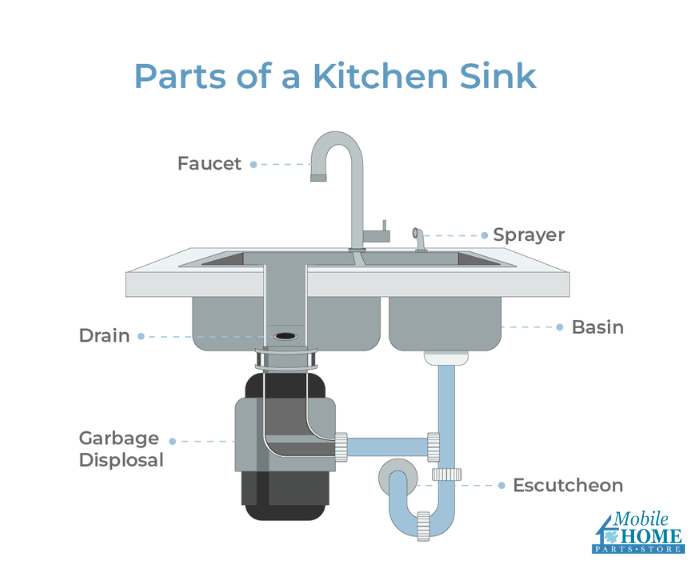 Kitchen sinks get used hard. Hot water, food debris, grease, quick rinses, full basins, and heavy drain cycles. That extra workload shows up under the cabinet.
Escutcheon
The escutcheon is the plate around the faucet. It cleans up the look, but it can also hide water for a while. If water gets under the plate, it can work its way down before you notice anything up top.
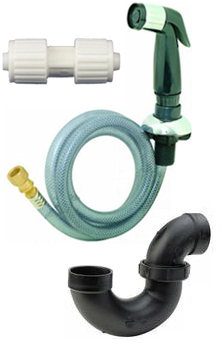
Spray Head and Spray Hose
If the cabinet gets damp only after you use the sprayer, go straight to the hose connections. Sprayer systems add movement and fittings, and that’s where leaks usually start.
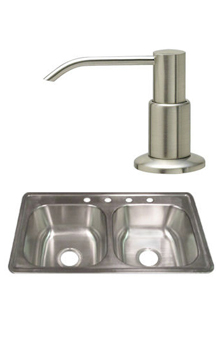
Strainer System
The strainer catches debris and seals the drain opening. If the cabinet stays dry while water runs but gets wet when you drain a full basin, check the strainer seal and the connections directly beneath it. That full-basin drain is when weak seals show themselves.
Garbage Disposal
A disposal changes how everything lines up under there. It adds weight and shifts alignment. If you have to force the piping to meet, it tends to come back later as seepage.
Stopper and Debris Control
If the kitchen sink is slow, clear the top first. Buildup at the strainer or stopper area causes a lot of slow drains. Handle that before you start pulling parts apart.
If your drain is slow, our article, How to Unclog a Kitchen Sink in Your Mobile Home, pairs well with what you’re seeing under the cabinet.
Parts of a Bathroom Sink
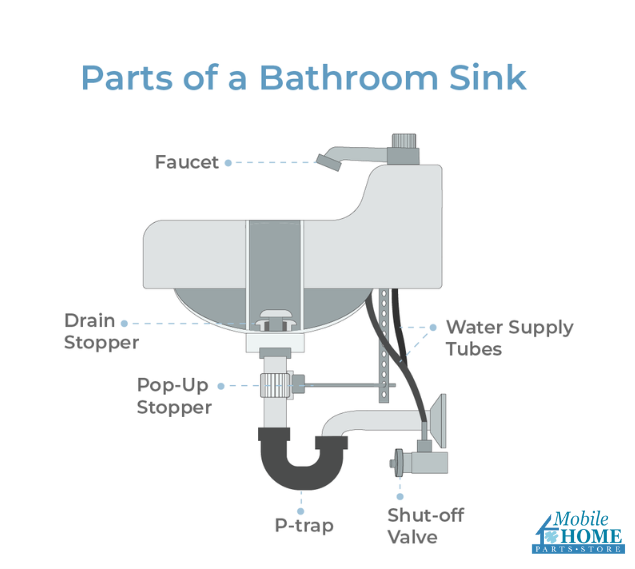
Bathroom sinks tend to be simpler, but stopper mechanisms add small parts that can slip out of adjustment.
Stopper Assembly
If the stopper won’t stay up or down, the linkage is usually the reason. Under the sink, the lift rod connects to hardware that moves the stopper. A pivot rod, spring clip, and clevis strap are common parts in that setup.
If the stopper won’t stay put, check alignment. If it won’t seal, clean the buildup at the drain seat and check the fit again. If the drain is slow, clear hair and residue near the opening before going deeper.
Valve Stops
Bathroom sinks usually have separate shut-offs for hot and cold water. If a valve won’t fully close, it’s worth fixing sooner rather than later. Repairs are harder when the shut-off is unreliable.
Faucet Parts That Affect a Mobile Home Sink
Most faucet problems show up as performance changes. Drips after shutoff. Weak flow. Water is collecting at the base.
Faucet Lever
If the lever feels loose or inconsistent, treat it as a symptom. The wear is usually inside the faucet body.
Faucet Body
Moisture around the base often comes from above and runs down, especially if the faucet mounting or seal is tired.
Spout and Spout Assembly
Leaks around a swiveling spout are often seal-related. If the spout wobbles and water shows up near the body, seals are usually worn.
Aerator
If only one faucet has low flow, check the aerator. Mineral residue can restrict it and make the faucet feel weak, even when the supply is fine.
Connections Under the Sink
Compression fittings, quick-connects, and braided lines are common sources of slow leaks. Staining or cabinet swelling is often the first clue.
If you’re tracking down a faucet drip, check out our guide, How to Fix a Leaky Faucet in a Mobile Home, walking through common fixes.
Drain Parts Under a Mobile Home Sink
Drain issues are rarely one failed part. It’s usually a seal that got misaligned, a gasket that aged out, or an alignment that’s slightly off.
Strainer Basket
The strainer basket sits in the drain opening and helps catch debris. In kitchens, it’s one of the simplest ways to prevent clogs.
Strainer Flange
Seal failure here often shows up only during full-volume drainage. If it leaks during a full drain, the flange seal is a top suspect.
P-Trap
Leaks here usually mean washer wear or slight shifting. If you see drips at the slip joints, reseating a washer and snugging the connection often solves it, assuming the parts are still in good shape.
Strainer Nut and Gaskets
These parts work as a system. When a gasket is pinched, out of place, or worn flat, water takes the easiest path, usually the cabinet floor. If seepage keeps returning in the same spot, don’t just tighten harder. Disassemble, clean, and reseat the sealing pieces.
Sinking the Drip, One Part at a Time
Once you can name the parts, sink problems stop feeling random. Check the supply side when the faucet is running. Check the drain side when a full basin empties. Pay attention to seals and connections, because that’s where leaks start.
When replacement parts are needed, Mobile Home Parts Store can help you match what’s already installed, from shut-off valves and supply lines to strainers, trap components, and faucet parts built for your mobile home sink.
Tags: Kitchen sink, mobile home plumbing, mobile home sink, plumbing

