 SIGN-UP FOR THE MHPS NEWSLETTER!












Quick Overview
GFCI outlets in mobile homes protect against electrical shock by cutting power the instant they detect a ground fault, which matters most in kitchens, bathrooms, and other areas near water. Building codes require them in these locations, and a GFCI that won’t reset or trips repeatedly is usually a sign it needs testing or replacement rather than something to ignore. Installing or replacing a GFCI outlet is a manageable project for a homeowner comfortable working with electrical basics, though anything involving the home’s main panel is better left to an electrician.
Summarize full blog with:
Kitchens and bathrooms are two of the most common places electrical shock hazards show up in a home, which is exactly why GFCI outlets in mobile homes are required in these rooms. If you’re not sure what a GFCI outlet actually does, or whether the ones in your home are working correctly, here’s what to know.
What a GFCI Outlet Does
A ground-fault circuit interrupter, or GFCI, constantly monitors the electricity flowing through a circuit. If it detects even a small imbalance, which can happen when current leaks through a person, water, or a damaged appliance, it cuts power to the outlet in a fraction of a second. This is different from a standard circuit breaker, which is designed to protect wiring from overload, not to protect a person from shock.
Where GFCI Outlets Are Required
Electrical codes require GFCI protection in kitchens, bathrooms, laundry areas, and any outlet near a water source or exposed to the outdoors. In a mobile home, this typically means outlets within a few feet of sinks, near washing machines, and any exterior outlets on the home’s deck or steps. If your home was built or last rewired before GFCI requirements became standard, it’s worth checking whether these areas actually have them.
How to Tell If You Have a GFCI Outlet
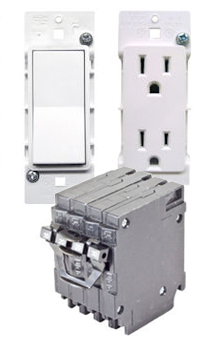
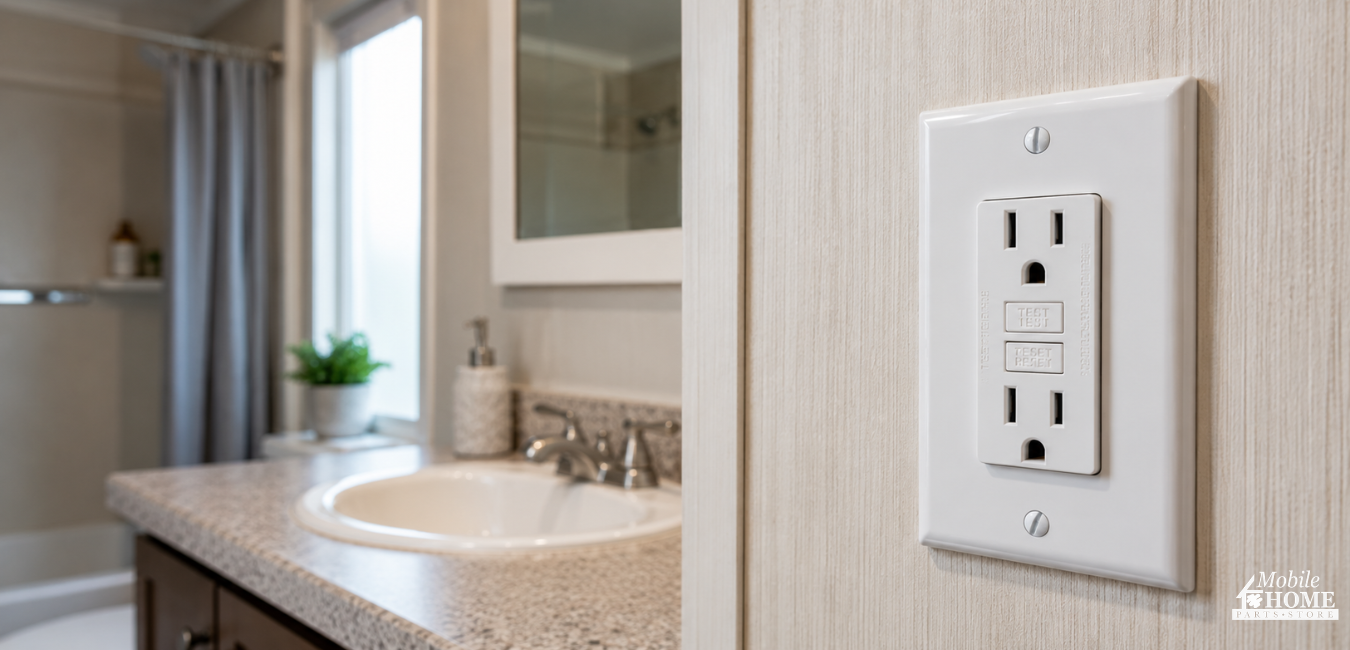
GFCI outlets are easy to identify by sight. They have “Test” and “Reset” buttons built into the outlet face, unlike standard outlets. If your kitchen or bathroom outlets don’t have these buttons, they may not be GFCI protected, or protection may be provided upstream by a GFCI breaker at the panel instead. Either way, it’s worth confirming which setup your home has.
Testing Your GFCI Outlets
Press the “Test” button. You should hear or feel a click, and the outlet should cut power immediately. Plug in a lamp or small device beforehand to confirm the power actually shuts off. Then press “Reset” to restore power. Test GFCI outlets monthly, since the internal components can wear out over time and stop tripping correctly even though the outlet still provides power normally.
Signs a GFCI Outlet Needs Replacing
If a GFCI outlet won’t reset after tripping, trips repeatedly for no clear reason, or fails the test button check by not cutting power at all, it needs to be replaced. A GFCI that no longer trips correctly is providing a false sense of protection, since it looks and functions like a normal outlet from the outside.
Installing a GFCI Outlet
Replacing a standard outlet with a GFCI outlet, or replacing a failed GFCI with a new one, follows the same basic wiring process: shut off power at the breaker, confirm it’s off with a voltage tester, then match the new outlet’s line and load wiring to the existing connections. GFCI outlets have separate “line” and “load” terminals, and getting these reversed means downstream outlets won’t get the protection they’re supposed to have, so double-check the wiring diagram that comes with the outlet before finishing the install.
Frequently Asked Questions
How often should I test GFCI outlets?
Test them monthly using the built-in Test and Reset buttons. This confirms the internal safety mechanism is still functioning correctly.
Can I replace a GFCI outlet myself?
Yes, if you’re comfortable shutting off power at the breaker and working with basic wiring. If you’re not confident identifying line versus load wiring, having an electrician handle it avoids leaving downstream outlets unprotected.
Do all outlets in my mobile home need to be GFCI?
Not all outlets require GFCI protection, but kitchens, bathrooms, laundry areas, and exterior outlets typically do. A single GFCI outlet can also protect other outlets downstream on the same circuit.
Mobile Home Parts Store carries GFCI outlets and related electrical parts for mobile home installations, in the Electrical department.
For more on this topic, see Common Electrical Problems in Mobile Homes and Replacing an Electrical Outlet in a Mobile Home.

