 SIGN-UP FOR THE MHPS NEWSLETTER!







Quick Overview
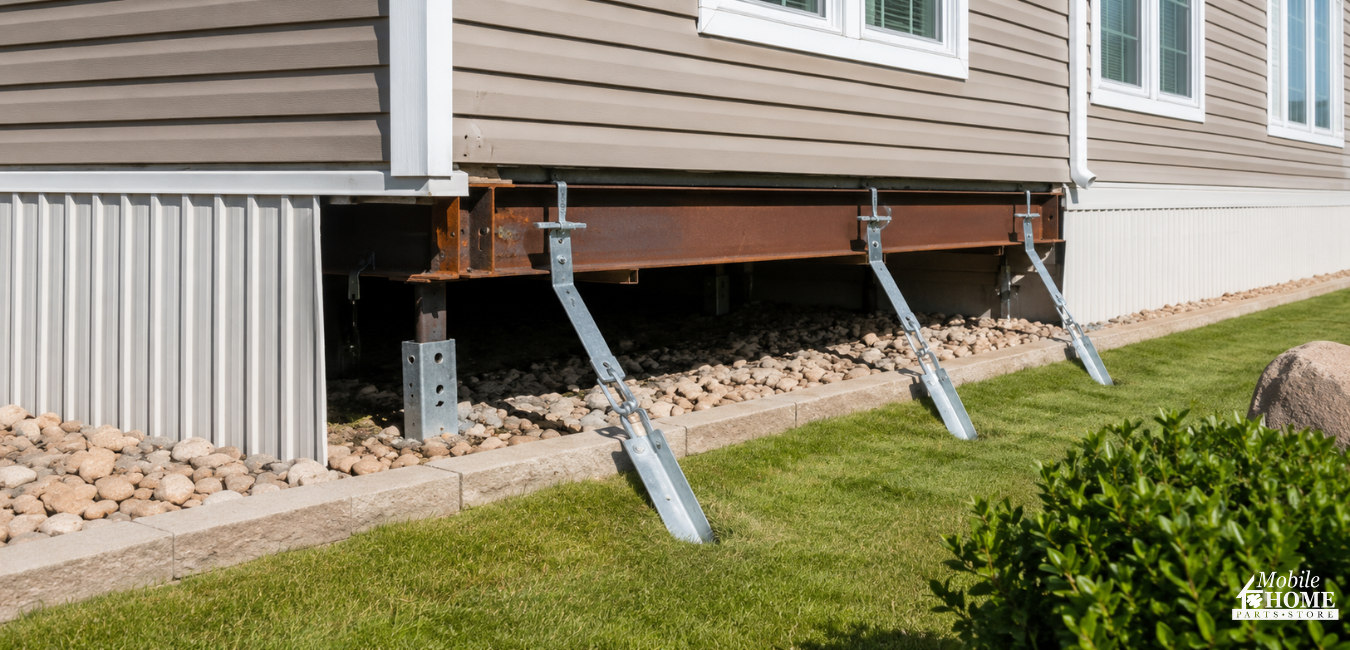
Mobile home anchoring systems keep your home secured to the ground against wind and shifting soil, and most jurisdictions require them by code. The main types are auger anchors, concrete deadmen, and arrowhead anchors, each rated for different soil conditions and wind zones. Installation involves setting anchors at the correct spacing and depth, then connecting them to the home’s frame with rated straps, and costs vary depending on anchor type, home size, and whether you hire a professional or install them yourself.
Summarize full blog with:
A mobile home that isn’t properly anchored can shift, rock, or in a bad storm, roll off its foundation entirely. Mobile home anchoring systems are what keep that from happening, tying the home’s frame to the ground with hardware rated for your local wind zone and soil type. Most states require a permitted anchoring system before a home can be occupied, so this isn’t a project to skip or guess your way through.
This guide walks through the main types of anchoring systems, what they typically cost, and what installation involves so you know what to expect before you buy.
Why Mobile Home Anchoring Systems Matter
Mobile homes weigh far less per square foot than site-built houses and sit on a chassis rather than a deep foundation. That combination makes them more vulnerable to wind uplift and lateral movement. A properly installed anchoring system transfers wind and ground-shift forces into the soil instead of into the home’s frame, which is what keeps the structure in place during storms and reduces stress on the skirting, plumbing, and utility connections underneath.
HUD and most state manufactured housing codes set minimum standards for anchor spacing, strap rating, and soil testing. If you’re replacing an old system or installing one for the first time, check your state’s specific tie-down requirements before you order parts, since spacing and anchor count depend on your home’s length, width, and local wind zone.
Types of Mobile Home Anchoring Systems
Auger Anchors
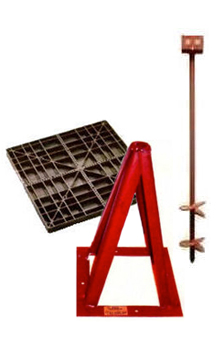
Auger anchors look like large corkscrews and are twisted directly into the ground until they reach the required depth. They’re the most common choice because they work in a wide range of soil types and don’t require excavation. A rated strap connects the top of the anchor to the home’s frame, and the anchor’s holding power comes from the resistance of the soil around the helix blades.
Auger anchors are not a good fit for very sandy or very rocky soil, where the blades can’t get a solid grip. A soil test before installation tells you whether augers will hold or whether you need a different system.
Concrete Deadmen
A concrete deadman is a buried concrete block or slab with an embedded strap or cable that runs up to the home’s frame. Deadmen work well in loose or sandy soil where auger anchors struggle, because the anchor’s holding power comes from the weight and surface area of the concrete rather than soil grip. The tradeoff is that deadmen require digging a hole and pouring or placing concrete, which adds time and cost compared to augers.
Arrowhead Anchors
Arrowhead anchors are driven into the ground rather than twisted, using a mechanism that expands once the anchor reaches depth so it can’t be pulled back out along the same path. They’re often used in harder soil where an auger would be difficult to twist in, and installation typically requires a hydraulic driving tool rather than hand tools.
What Mobile Home Anchoring Costs
Anchor kits themselves are the least expensive part of the project, with individual auger anchors and straps typically running in the tens of dollars each. A full system for a single-wide home usually needs somewhere between 8 and 12 anchor points, while a double-wide needs more to cover both halves plus the marriage line. Professional installation adds labor costs on top of parts, and pricing varies by region and soil conditions. If you’re comparing quotes, ask whether the price includes a soil test, since skipping one can mean installing the wrong anchor type for your ground.
Installing a Mobile Home Anchoring System
1. Test the Soil
Before choosing anchor type or spacing, test the soil’s holding capacity. This determines whether auger anchors will work or whether you need deadmen or arrowhead anchors instead.
2. Mark Anchor Locations
Anchor spacing is determined by your home’s length, width, and local wind zone rating, not guesswork. Mark each location along the frame’s perimeter and at the marriage line for multi-section homes.
3. Install and Connect Anchors
Set each anchor to the required depth, then connect it to the home’s frame using a strap or cable rated for your wind zone. Straps should run at the angle specified by the anchor manufacturer, since the wrong angle reduces holding strength even if the anchor itself is installed correctly.
4. Tension and Inspect
Once connected, straps need to be tensioned to the manufacturer’s specification, not just pulled snug by hand. After installation, walk the full perimeter and check that every strap is tight and every anchor is fully seated.
Maintaining Your Anchoring System
Anchor straps can loosen over time as soil settles or shifts with seasonal moisture changes. Check tension at least once a year, and more often after severe weather. Rust on strap hardware is a sign it’s time to replace that connection point rather than wait for it to fail.
Frequently Asked Questions
How many anchors does a mobile home need?
Most single-wide homes need 8 to 12 ground anchors, while double-wides typically need more to cover both sections and the marriage line. Your exact count depends on home length, width, and local wind zone requirements.
Can I install mobile home anchors myself?
Auger anchors are the most DIY-friendly option since they don’t require excavation, but a soil test and correct spacing still matter. If your soil is rocky, sandy, or you’re unsure which anchor type fits, a professional installer can save you from redoing the work.
How often should anchor straps be replaced?
Inspect straps annually and replace any showing rust, fraying, or looseness that tensioning can’t fix. Straps in coastal or high-humidity areas typically need replacement sooner than those in dry climates.
For anchor kits, straps, and piers rated for your home’s size and wind zone, see the Set-up Supplies department at Mobile Home Parts Store.
For more on this topic, see The Basics of Installing Mobile Home Anchors and A Homeowner’s Guide to Mobile Home Tie-Downs.

