 SIGN-UP FOR THE MHPS NEWSLETTER!






Quick Overview
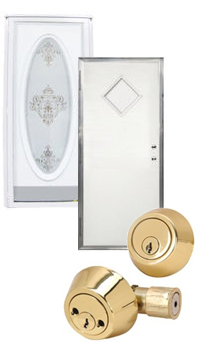
A mobile home storm door adds a layer of weather protection and security between the entry door and the outside. Aluminum models are lighter, rust-resistant, and the most common choice. Wood-core doors are heavier, better insulated, and closer to a standard residential feel. Sizing, view style, and installation method differ enough from site-built homes that it is worth understanding both options before you buy.
Summarize full blog with:
If the storm door on your mobile home is getting difficult to close, showing rust at the corners, or just failing to seal the way it used to, replacement is usually straightforward. The harder part is choosing which door makes sense for your situation.
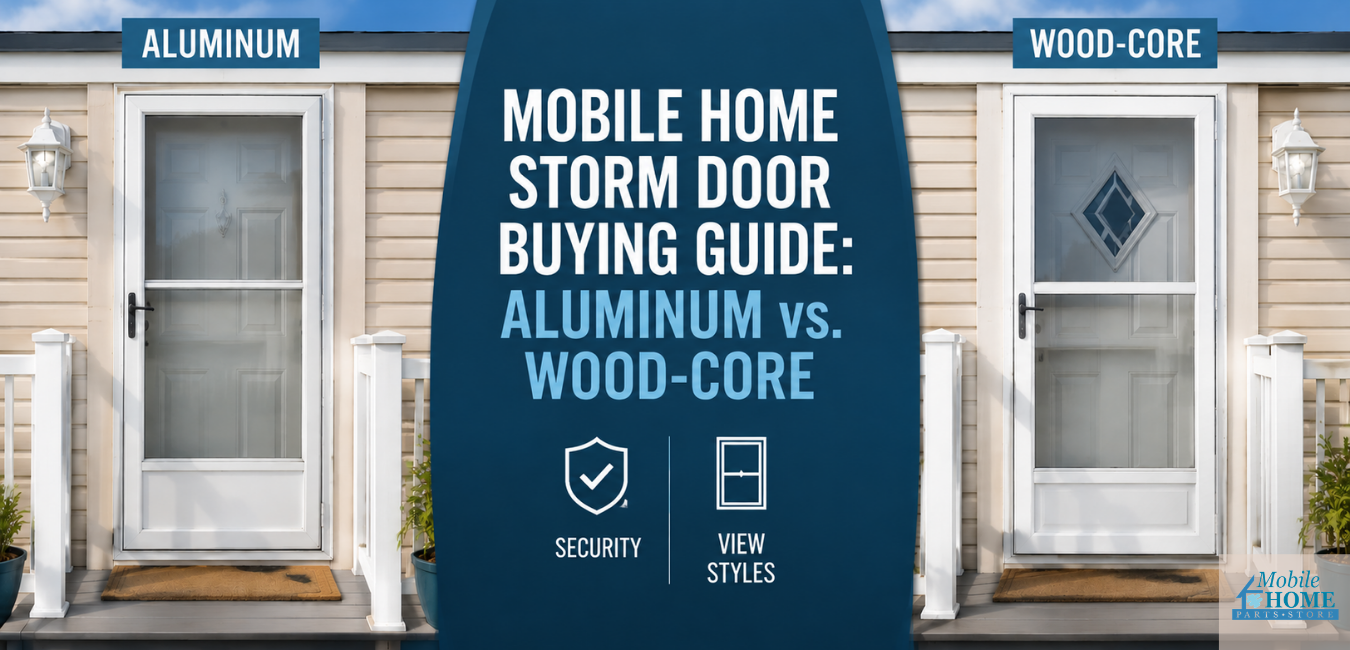
Most mobile home storm doors fall into two categories: aluminum and wood-core. Knowing the difference helps you choose the right mobile home storm door for your entry, your climate, and your budget. They are not interchangeable, and the differences go beyond material. Weight, insulation, security, view options, and installation requirements all vary between the two. This guide covers what sets them apart, where each one performs well, and what to check before you order.
What a Storm Door Does on a Mobile Home
A storm door installs in front of the entry door and acts as a buffer between the elements and your primary door. On a mobile home, that function matters more than people often expect.
Mobile home exterior doors are typically thinner and less insulated than doors on site-built homes. A well-fitted storm door helps close that gap. It reduces drafts in winter, gives you ventilation options in spring and fall without opening the main door, and adds a secondary barrier that slows down both weather and unwanted entry.
Storm doors also extend the life of the entry door behind them. UV exposure, rain, and wind cause real wear on door finishes over time. Keeping a storm door in good shape means your entry door is protected from most of that.
Aluminum Storm Doors
Aluminum is the most common material for mobile home storm doors, and for good reason. The frames are light, which matters when you are working with thinner door frames and smaller hinges than a standard residential setup. Aluminum does not rust, which is an advantage in humid climates or areas that get significant rain.
Most aluminum storm doors come with a baked-on finish, usually white, almond, or brown, that holds up reasonably well to sun and moisture. They are generally less expensive than wood-core options, and they are widely available in the sizes that mobile homes require.
On the downside, aluminum conducts temperature. A metal door frame in direct sun gets hot. In cold weather, it can transfer cold air into the surrounding trim. Some aluminum doors include a thermal break in the frame to reduce this, but not all do. If energy efficiency is a priority, it is worth checking the specs before buying.
Security on a standard aluminum storm door is limited. The frames are light by design, and most come with a basic latch rather than a deadbolt-ready lock. If security is a concern, look specifically for aluminum doors rated as security storm doors. These have reinforced frames, multi-point locking hardware, and heavier-gauge construction that makes forced entry significantly harder.
Wood-Core Storm Doors
Wood-core storm doors have an interior wood or composite wood frame with an aluminum or steel cladding on the outside. The result is a door that feels more substantial than a standard aluminum unit. It insulates better, closes with more weight behind it, and generally handles temperature swings more evenly.
For mobile homes in areas with cold winters, the improved insulation in a wood-core door can make a noticeable difference at the entry. These doors also tend to hold locks and hardware more securely because there is more material to anchor into.
The trade-off is weight. Wood-core doors are heavier, and mobile home door frames are not always built to handle that load long-term. If the frame around your entry door has any flex or soft spots, adding a heavier door can put stress on the surrounding trim and threshold. It is worth checking the frame condition before choosing a wood-core option.
Cost is also higher. Wood-core storm doors run more than comparable aluminum models, and they are less commonly stocked in mobile-home-specific sizes, which can mean special ordering or adapting a standard residential door to fit.
Comparing the Two: A Quick Reference
| Feature | Aluminum Storm Door | Wood-Core Storm Door |
|---|---|---|
| Weight | Light | Heavier |
| Insulation | Moderate (thermal break helps) | Better |
| Rust resistance | Yes | Depends on cladding |
| Security options | Standard or reinforced (security models) | Better hardware anchoring |
| Cost | Lower | Higher |
| Mobile home availability | Wide | More limited |
View Styles and What They Mean for Your Door
Storm doors come in a few different view configurations, and the one you choose affects how the door functions day to day.
A full-view door has glass from top to bottom, which maximizes light and visibility. These are popular when the entry gets good light or when the homeowner wants to be able to see out clearly. The glass panel is typically interchangeable with a screen panel for ventilation.
A mid-view door has glass in the upper portion and a solid panel at the bottom. The solid lower section adds a small amount of insulation and is harder to kick in than glass. This style is a reasonable middle ground for entries that get moderate traffic.
A high-view door has a smaller glass insert near the top, with most of the door being solid panel. These offer the least visibility but the most protection from wind, rain, and impact. They work well for entries on the weather side of a home or in areas with frequent strong storms.
For mobile homes specifically, full-view and mid-view doors tend to be the most common. The solid-panel bottom on a mid-view door can actually help with the gap that sometimes develops between the threshold and the door frame on older mobile home entries.
Getting the Size Right
Sizing is where mobile home storm door purchases go wrong most often. A mobile home storm door that is the wrong height or width will not seal, latch, or hang correctly. Mobile home door openings do not follow the same standard dimensions as site-built residential doors, and assuming otherwise leads to returns and installation headaches.
The most common mobile home entry door widths are 32 inches and 34 inches, with a standard height of 76 inches. This is shorter than the 80-inch height found on most residential doors. Before ordering any storm door, measure the actual opening.
Measure the width at three points: the top, the middle, and the bottom of the opening. Use the narrowest measurement. Measure the height on both sides and use the shorter number. Mobile home frames are not always perfectly square, and the opening can vary by a quarter inch or more from one side to the other.
Most storm doors designed for mobile homes are labeled as such and come in the smaller standard sizes. If you are shopping a general home improvement supply, check the product specs carefully. A door listed as 32×80 will not fit a 32×76 opening without modification.
Security: What to Look For
A standard storm door adds a modest layer of security but is not designed as a primary security barrier. If you want the storm door to serve a real security function, there are specific features to look for.
A reinforced frame, whether aluminum or wood-core, matters more than the door panel itself. Most forced entries involve the frame giving way rather than the door itself failing. A heavier-gauge frame with solid corner construction holds up better.
Multi-point locking systems engage the door at more than one point along the frame, which distributes force and makes prying significantly harder. Single-point latches, which most basic storm doors use, offer minimal resistance.
Hinges on the interior side of the door are harder to access and remove. Security-rated storm doors position the hinges so they cannot be reached from the outside.
If security is a primary reason you are replacing the door, look specifically for storm doors marketed as security doors rather than standard storm doors with a deadbolt added. The construction is meaningfully different.
Installation Considerations
Most mobile home storm doors install with a Z-bar frame system that attaches to the existing door frame. The door itself hangs on the Z-bar rather than being mounted directly to the frame, which gives some flexibility when the opening is not perfectly square.
Hinge placement matters. If you are also considering a screen door for the same entry, this guide on installing a mobile home screen door covers the process in detail. Mobile homes open outward by default, which affects which side the hinges go on and how the door is oriented for installation. Confirm the door swing direction before purchasing. Most storm doors are available in left-hand or right-hand configurations.
The door closer is worth paying attention to. You can find replacement closers and exterior door hardware at Mobile Home Parts Store. Cheap pneumatic closers wear out quickly and can let the door slam in wind. A heavier-duty closer rated for the door weight will hold up longer and reduce frame stress over time.
If the existing frame has rot, soft spots, or significant gaps at the threshold, address those before installing a new door. A new storm door installed over a compromised frame will not seal correctly and may develop alignment problems within a season or two.
Finding the Right Door
Mobile Home Parts Store carries aluminum mobile home storm doors sized specifically for mobile home openings, including both standard and security-rated options. If you have measured your opening and know what you are working with, the door category is a good place to start narrowing down.
Browse mobile home exterior doors at Mobile Home Parts Store
If you have questions about fit or need help matching a door to your specific opening, the product pages include sizing details that make it easier to confirm compatibility before you order.
Frequently Asked Questions
Are mobile home storm doors the same size as regular storm doors?
+
Can I install a wood-core storm door on a mobile home?
+
What is the most secure type of storm door for a mobile home?
+
Do mobile home doors open inward or outward?
+
How do I know if my storm door is the right size?
+
Tags: aluminum storm door, buying guide, door replacement, Exterior Doors, Mobile home doors, mobile home storm door, storm doors

