 SIGN-UP FOR THE MHPS NEWSLETTER!






Quick Overview
Mobile homes are prone to air leaks, moisture intrusion, and seam separation that standard caulk alone won’t fix. Using the right mobile home sealants in the right locations protects against water damage, energy loss, and material failure. Silicone works for windows and wet areas. Butyl rubber handles roof seams and metal surfaces. Lap sealant is made for rubber roofs. Matching product to location is what makes the repair hold.
Summarize full blog with:
Mobile homes face weatherproofing challenges that most site-built homes don’t. The construction uses thinner wall sections, factory-assembled seams, and materials that expand and contract more than conventional framing. Over time, those seams open up. Skirting lines gap out. Roof edges lift. Window perimeters let air and moisture through. Mobile home sealants are one of the most practical tools for addressing these problems before they turn into water damage, mold, or a heating bill that doesn’t make sense.
This guide covers the types of mobile home sealants that work best for manufactured housing, where to apply them, and how to know when it’s time to reapply.
Why Mobile Homes Need the Right Sealants
Mobile home construction is designed around factory assembly and highway transport. That means joints, seams, and connections that behave differently than those in site-built homes. The roof-to-wall connection is exposed. The skirting line sits close to the ground. Windows and doors are set into thinner framing that moves more with temperature and humidity swings.
Those conditions put real demands on any sealant you apply. A product that works fine on a brick exterior or poured concrete foundation may not flex enough, bond correctly, or hold up to the UV exposure that a metal roof or vinyl siding receives. Getting the product match right is what separates a repair that lasts from one that fails within a season.
The other issue is moisture tracking. Mobile homes have a bottom board underneath the floor cavity. When perimeter seals around doors, windows, or roof edges fail, water finds its way in and works downward. The mold and moisture problems that develop under a mobile home often trace back to a failed exterior sealant point, not a plumbing issue or major roof failure. A seam that should have been resealed a season earlier.
Types of Mobile Home Sealants and Where Each Fits
Most hardware stores carry a wall of caulk and sealant options. For mobile homes, the choices narrow down based on where you’re working and what that surface does.
Silicone Sealant
Silicone is waterproof, flexible, and holds up well to temperature changes. It bonds to glass, metal, and most plastics without breaking down, which makes it the right pick for windows, exterior door perimeters, and any area with sustained water exposure. It does not accept paint, so for interior trim work that will be painted, a different product is the better call.
Acrylic Latex Caulk
Acrylic latex is easier to work with than silicone and cleans up with water. It can be painted over once dry, which makes it useful for interior work around trim, walls, and ceiling seams. It is not suited for areas that see standing water or prolonged moisture. Those locations need a waterproof product.
Butyl Rubber Sealant
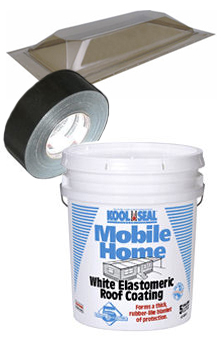
Butyl rubber is the workhorse of mobile home sealants for roof and exterior seam work. It stays flexible in cold weather, bonds well to metal, EPDM, and vinyl, and resists UV degradation better than standard caulks. Sealing around a roof vent, skylight flashing, or metal roof seam calls for butyl. Many of the products in the Tapes and Sealants department at Mobile Home Parts Store are butyl-based for this reason.
Lap Sealant
Lap sealant is a specific product used with rubber (EPDM) and TPO roofing systems. It goes over seams, around penetrations, and along the lap edges where one layer of roofing overlaps another. It stays permanently flexible and does not crack or shrink the way a standard caulk would on a membrane roof. If your mobile home has a rubber roof and you’re sealing around a pipe boot or vent collar, lap sealant is what the repair calls for.
Self-Adhesive Flashing and Peel-and-Seal Products
For larger roof seam repairs, self-adhesive roofing membrane can cover areas that sealant alone cannot bridge reliably. Peel and Seal roofing products are a common solution for mobile home roofs because they go on without specialized equipment, bond directly to the roof surface, and create a waterproof layer over damaged or aging seams. They work alongside butyl and lap sealant rather than replacing them. Sealant handles the edges and penetrations. Peel-and-seal covers the field.
Mobile Home Sealant Comparison: Which Type for Which Job
| Sealant Type | Best For | Paintable | Notes |
|---|---|---|---|
| Silicone | Windows, exterior doors, wet areas | No | Flexible, waterproof, bonds to glass and metal |
| Acrylic Latex | Interior trim, wall seams, baseboards | Yes | Easy cleanup. Not for sustained moisture |
| Butyl Rubber | Roof vents, skylights, metal seams, skirting | No | Flexible in cold, UV-resistant, bonds to metal and vinyl |
| Lap Sealant | EPDM/TPO roof seams and penetrations | No | Permanently flexible. Designed for rubber roofs |
| Self-Adhesive Membrane | Large roof seam coverage | No | Works alongside butyl/lap sealant. Covers field areas |
Where to Apply Mobile Home Sealants
Windows and Exterior Doors
The perimeter seal around a mobile home window is one of the first places to check when you notice drafts or feel cold spots near the frame. Mobile home windows are set into thinner framing than site-built windows, and the gap between the window unit and the wall can open as the home settles or the framing moves seasonally. Silicone sealant handles this well. Run a bead around the outside perimeter where the window frame meets the exterior wall, and check the interior side for gaps at the trim. For door weatherproofing in more depth, the guide to insulating and weatherproofing a mobile home door covers threshold and weatherstripping considerations alongside the perimeter seal.
Roof Seams, Vents, and Penetrations
The roof is where most mobile home water problems start. Seams along the ridge, around vent pipes, at skylight flanges, and where the roof deck meets the end wall are common failure points. Butyl sealant handles most of these situations. For larger areas or where the existing roofing membrane has cracked or lifted, peel-and-seal membrane extends the coverage. For a complete picture of what works for different mobile home roof types, the article on mobile home roof coating options covers what to combine with sealant for a more complete repair.
Skirting Line and Foundation Perimeter
The joint where skirting attaches to the home’s exterior wall is worth sealing whenever you’re doing exterior maintenance. Butyl rubber sealant or a foam backer rod with sealant over it handles this joint. Cold air, pests, and ground moisture use any gap at the skirting line as an entry point, and the fix is inexpensive relative to what it prevents.
Bathroom and Kitchen Wet Areas
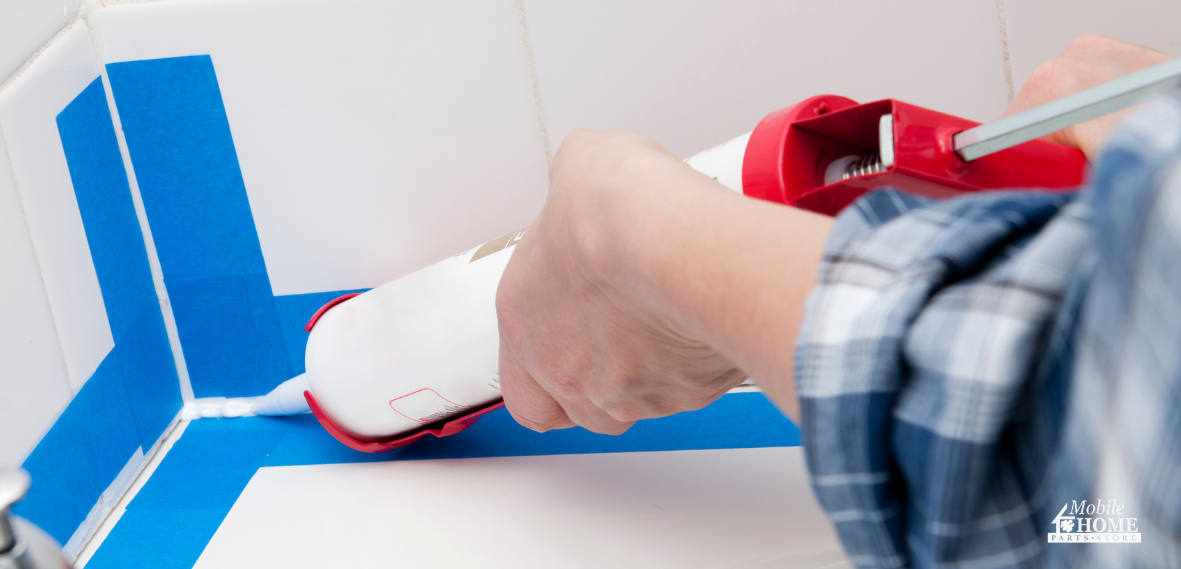
Silicone sealant around tub surrounds, sink perimeters, and countertop backsplash joints is standard maintenance. In a mobile home, the materials used in bathrooms and kitchens tend to flex and shift more than tile or stone, and that movement breaks down sealant faster than you might expect in a site-built home. Inspect the caulk line at the base of your tub surround and around the sink at least once a year and reapply when you see gaps, discoloration, or any lifting at the edges.
Applying Mobile Home Sealants Correctly
Surface prep is what separates a seal that holds from one that fails before the next season. Old sealant needs to come out fully. Cut it out with a utility knife and clean the surface down to the base material. Any residue, moisture, or loose material will compromise adhesion. Let the surface dry completely before applying anything new.
Cut the nozzle at a shallow angle and keep your bead consistent. Pressing the nozzle lightly into the gap as you move produces better adhesion than riding along the surface. Tool the bead smooth with a wet finger or a caulk tool within a few minutes of application, then leave it alone. Most silicone and butyl products need 24 hours before water exposure. Check the cure time on the specific product you’re using, since some butyl tapes and sealants cure more slowly in cold weather.
When to Recheck and Reapply
Mobile home sealants don’t last indefinitely. Products on the roof and anywhere exposed to direct sun degrade faster than interior work. A workable schedule is to check exterior sealant points in early spring before any wet season, and again in the fall before temperatures drop. Look for cracking, shrinkage away from the substrate, discoloration, or any soft spots where the bead has absorbed moisture. If you’re already up doing roof maintenance or exterior repairs, running a fresh bead around any penetration or seam while you’re there costs almost nothing and prevents the next round of repairs.
Mobile Home Sealants FAQs
What is the best sealant for mobile home roof repairs?+
Can I use regular caulk on a mobile home roof?+
How long do mobile home sealants last?+
Can mobile home sealants be painted over?+
How do I remove old sealant from a mobile home?+
Mobile Home Parts Store carries a full range of mobile home tapes and sealants, including butyl rubber products, self-adhesive roofing tape, and lap sealants suited for manufactured home roof systems. If you’re working through a weatherproofing project and want to confirm you have the right product for the job, the department page is a practical place to start.
Tags: caulking, mobile home, Mobile Home Tapes & Sealants, Sealants, Tapes & Sealants

