 SIGN-UP FOR THE MHPS NEWSLETTER!








Quick Overview
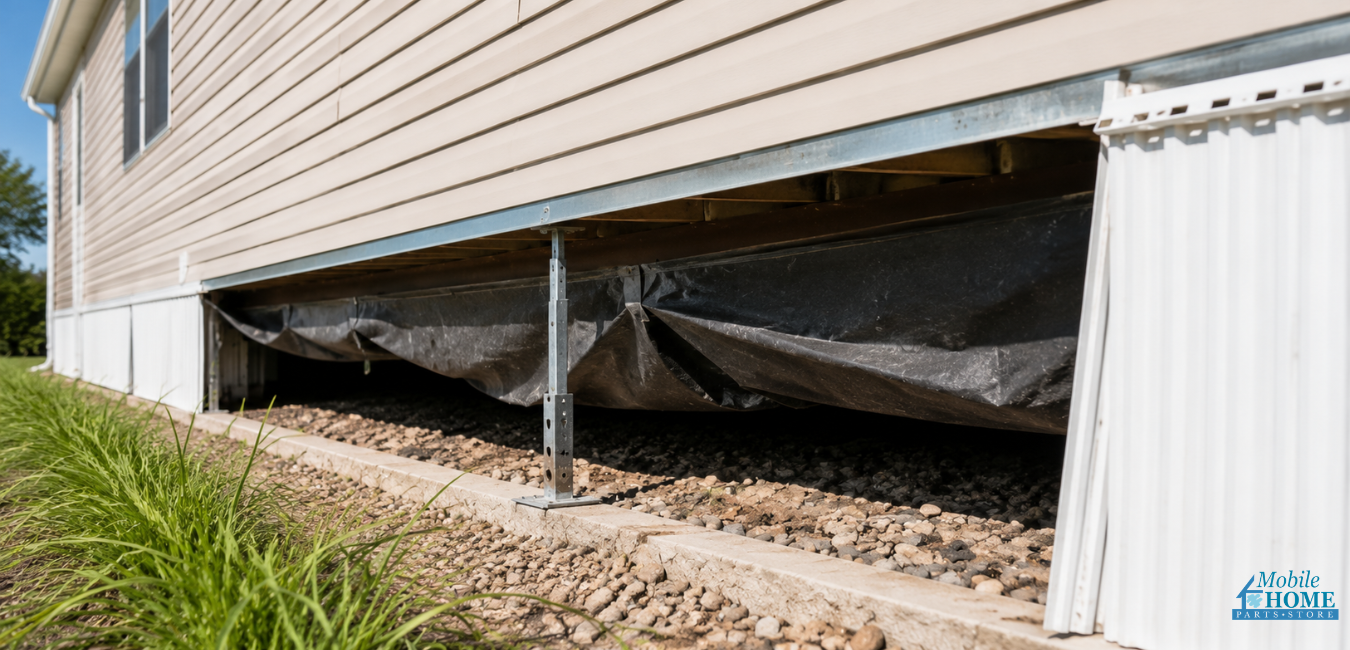
A mobile home underbelly hanging down usually means the bottom board has torn, come loose from its fasteners, or absorbed enough moisture to sag under its own weight. Common causes include water intrusion, pest damage, age-related brittleness, and insulation shifting inside the belly cavity. Most sagging sections can be patched or re-secured with self-adhesive bottom board material without removing the entire underbelly, as long as the damage is caught before insulation falls out or gets wet.
Summarize full blog with:
If you’ve noticed a section of fabric or board sagging below your home, you’re not imagining it. A mobile home underbelly hanging down is one of the most common crawl space problems homeowners run into, and it’s worth addressing quickly, since a small tear tends to grow once wind and moisture get behind it.
Here’s what usually causes it and how to fix it before the problem spreads.
What the Underbelly Actually Does
The underbelly, sometimes called the bottom board, is the material stretched across the bottom of your home’s frame to protect the insulation, ductwork, and plumbing lines underneath. It’s meant to keep out moisture, pests, and wind while holding the belly insulation in place. When it sags or tears, all three of those protections are compromised at once.
Common Causes of a Sagging Underbelly
Water Damage
Water is the most common cause of a sagging bottom board. Ground moisture, poor drainage under the home, or a plumbing leak overhead can soak into the material, adding weight and weakening the fibers until it stretches and droops.
Age and UV Exposure
Older bottom board material becomes brittle with age, especially in sections exposed to sunlight at the home’s edges. Brittle material tears more easily under its own weight or from wind pressure.
Pest Damage
Rodents and other pests chew through bottom board material to nest in the warm, insulated space underneath a home. Once there’s an opening, insulation can shift or fall, adding weight to nearby sections and accelerating sagging.
Fastener Failure
Bottom board is held up with staples, screws, or furring strips along the frame. Over time, these fasteners can rust, loosen, or pull free, especially near the edges where wind puts the most stress on the material.
How to Fix a Sagging or Torn Underbelly
1. Identify the Full Extent of the Damage
Check the entire underbelly, not just the visibly sagging spot. A sag in one place often means fasteners nearby are also loosening, and it’s more efficient to address a full section at once than to patch the same area repeatedly.
2. Remove Damaged Material and Check Insulation
Carefully pull back the torn or sagging section and check whether the insulation underneath is wet, moldy, or has shifted out of place. Wet insulation should be replaced, not dried and reused, since it loses its effectiveness once soaked.
3. Patch or Replace with Bottom Board Material
Small tears can be patched with self-adhesive bottom board tape or material designed for underbelly repair. Larger sagging sections usually need a full panel replacement rather than a patch, since a patch alone won’t support insulation that’s already shifted.
4. Re-secure Fasteners
Whether you’re patching or replacing, make sure fasteners along the repaired section are new and properly seated. Reusing rusted or bent fasteners is a common reason repairs fail again within a year.
Preventing Future Sagging
Walk the underbelly a few times a year, especially after storms, and look for small tears before they grow. Keep gutters and grading around your home directing water away from the crawl space, since standing water underneath is one of the biggest contributors to bottom board failure. Sealing any gaps where pests could enter also protects the material from the inside out.
Frequently Asked Questions
Can I repair a sagging underbelly myself?
Small tears and localized sagging are manageable DIY repairs with the right bottom board patch material. Widespread sagging, wet insulation, or damage near plumbing and ductwork is worth having a professional assess first.
What material is best for underbelly repair?
Self-adhesive bottom board material and heavy-duty bottom board tape are both designed specifically for this repair and hold up better than general-purpose tarps or plastic sheeting, which aren’t rated for ground contact or UV exposure.
How long does a bottom board repair last?
A properly fastened repair using rated bottom board material typically lasts several years, though areas exposed to more sun or moisture may need rechecking sooner.
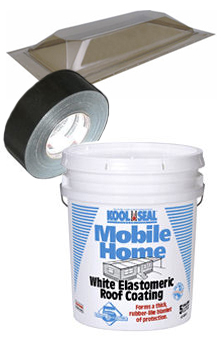
Mobile Home Parts Store carries self-adhesive bottom board material and heavy-duty repair tape sized for common underbelly repairs, in the Bottom Board Repair department.
For more on this topic, see Mobile Home Bottom Board and How to Repair Mobile Home Bottom Board.

